Road To Your Name - Season 6, Episode 7: A conversation with George Doxtater, Linguist and Kanien'keha Speaker
Download MP3RTYN GEORGE
[00:00:00]
Lisa: Last spring, I attended the Six Nations Language Summit held in my community at Six Nations of the Grand River. The theme of the summit was Our Home, Our Languages, Our Future. There I learned that a number of our Haudenosaunee languages have less than a hundred first language speakers left, which is alarming.
We're really at a vital time in our history that we need to focus on the survival of our languages for the generations coming. My traditional language is Genyagéha, the Mohawk language. All four of my grandparents were fluent in this language, and I can still remember the sound of their voices as they conversed in Genyagéha.
They didn't speak the language much and weren't aggressive in teaching me because of the residential school policies we were all affected by. I can specifically recall being confused at my grandfather's reluctance [00:01:00] and engaging with me and speaking the language when I was a child. At the time. I didn't know the pain he endured at spending his entire childhood and most of his teen years at a residential school, where he was made to feel ashamed of being Ongwehonwe.
I did learn some of the language at elementary school with our language teacher, Ruth Isaac. Mrs. Isaac taught us the language phonetically, so that's the way I first learned to read and write it. In adulthood, I continued to learn with one of our first language speakers, Ima Johnson Gaha. My language learning journey continues to the present day.
I'll always be learning K'inigeha. I've been told that it's one of the more complex languages to learn in the world. What I love about the language is that it's It's imagery and action based. It's descriptive and it's encased in [00:02:00] humor. There's not a more beautiful sight than watching people conversing in Gen Yike Ha and laughter breaking out.
It always happens. I've reached some milestones along my journey. One being able to read and write the language. A major accomplishment for me was learning the Ohantikaliwadekwa, the Thanksgiving address. I still need the assistance of prompts, but I'm getting there. I think of my grandmother and grandfather.
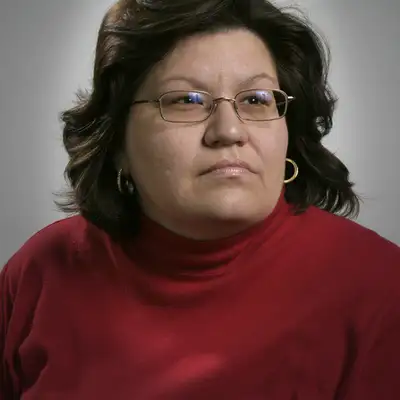
Father Vera and Titus Fenevery who are fluent Kinyakaha speakers and wish I could speak to them today in the language. On this episode of Yo Hatte Nekasana, we're visiting with George Dockstader, a member of the Mohawk Nation at Six Nations of the Grand River. He has a master's degree in multilingualism and a bachelor's degree in linguistics.
Currently he works in language revitalization on Six Nations. Welcome George to the podcast.
Geroge: Yeah, thank you for having [00:03:00] me.
Lisa: Okay, let's get right to it. I'm so excited that I get to talk about language on this entire podcast. Let's do it. Yeah, because language is a passion of mine and I know it's a passion of yours, right?
Tell me where you went to school to get your degrees.
Geroge: Okay, thank you for the introduction. Yeah, so I'll start off a little bit further back from that. So right after high school, I actually spent two years studying Mohawk. pretty thoroughly at Ungo Wana Kanjohkwa down at the reserve and afterwards I went for my bachelor's degree in linguistics at McMaster University so it was did a brief stint in Japan for a little bit, but once I came back and I finished my bachelor's degree then I decided it would be cool to continue on with that, what was it, international voyage for academic research, and get my [00:04:00] master's degree at the University of Groningen in the Netherlands.
What was the question again?
Lisa: Oh, I just wanted you to elaborate on where you got your schooling, your education with more of the language. What was that like being, um, a Mohawk in Japan? That's interesting. Oh, that's a,
Geroge: I've never had that question poised. It's poised to me before immediately I can't I just remember the feeling I had when I was over in Japan.
It felt like I was in a very large reserve. That's the only way I could see things. And I was like, oh my god, because that reflects where I'm coming from. Because everybody, it's Japan, right? It was just one group of people. It was Japanese from sea to shining sea, so to say, right? And I guess also too, what was it, I was very appreciative.
Of the nature that was still present over there. I was [00:05:00] so not fascinated, but I found great comfort in Something just like the mountains off in the distance and they still had all their forests on them, right? And like around here, we're relatively flatlands, right? So we don't really have it's just the bush or the sky when you look up look out, right?
But I just really appreciate how there was even certain areas in Kyoto or even Nara where you could tell that things haven't changed for thousands of years. I remember I was in Nara this one time. It was at a lantern festival. And there was this, I don't know what it's called. It's not a pagoda, but it's like one of those temples, almost like a shrine area.
And I was looking at it, but then I looked further ahead from it and I saw the full moon out, right? And then I thought to myself, Oh, Yeti Sota. And I was like, Oh, wait a minute. That's right. We call it that. We call it Yeti Sota, Sonta, Neka, [00:06:00] Garakwa. But over here, it has almost a different meaning. It has a different, Culture behind it what the moon represents over there.
Yeah, and so I just thought that was a Interesting that was like a snapshot memory right there. So what was it like being a mohawk in japan?
Intro: Yeah,
Geroge: you know what? I'll say it like this. I'll rephrase that question What was it like being a mohawk who could speak your language in japan?
Intro: Yeah
Geroge: felt very reassuring and it felt very comforting Yeah, even though I was away from home, even though I was literally on the other side of the world Not even in north america Just the fact that I had my language really kept me grounded and made me feel secure in who I was.
And that was probably the main reason why I wanted to learn the language in the first place Was because I knew I was going to be going to university and beyond And I was going to be [00:07:00] exposed to all different sorts of Mindsets and philosophies, right? and so back when I was 17 or 18 still in high school I didn't really know what I wanted to do after high school.
I just knew that I wanted to get the language first And then have that form the basis for whatever else it is I do. So in a sense it gave me the confidence afterwards to, to go to places like Japan or the Netherlands or Europe in general. And I really do attribute it to that strong foundation that I've been able to reclaim, repatriate by taking the time to actually study Kanyakeha.
Lisa: It's just like, I feel that too. I feel like it's a piece of the puzzle that we're putting in place within ourselves Yeah, and it's just It just seems like you know When you put that piece of [00:08:00] puzzle in you've been looking for and the whole and the whole scheme of things and you and it fits It's like a satisfaction, right?
And it's part of, it's part of who we are, our identity. It's such a strong part that it just feels really good to be able to speak the language. Are you fluent now in Genyikeha?
Geroge: So I will say in a more conservative manner that I'm conversationally proficient. Fancy way of saying I can get my point across and there's still a lot to learn, right?
I think if I went over to one of the Eastern communities, there'd be a lot of dialect differences and I wouldn't be, I wouldn't have that much experience with, but what was it? It would be. That's, to me, that's what I see as like the next level of learning in my language journey, if you'll call it that, where if I [00:09:00] do spend time over there, I'll actually learn more colloquial.
Let
Lisa: me see. When I think about speaking, like you were talking about different levels in our journey, you're saying you're comfortably proficient. I wouldn't say I'm at that level yet. I'm still at a level where if I, If I was sitting there listening to people's conversation in the language, I could pick up sometimes what they're talking about, right?
I could get words and I could recognize some words. I can do the Thanksgiving address. I know all the words of that. So I'm And you're right. We're always learning to get to that next level. And when I think back to listening to the old people talk, just talking, having conversations, there were so many words that they used
Geroge: that
Lisa: we probably don't even hear [00:10:00] anymore because they use the old language, right?
Geroge: Yeah. Like little isms that are like unique to each individual.
Lisa: Yeah. And the Mohawk language is You can, you make up your words too, right? Because it's so verb based and descriptive.
Geroge: What was it? A verb has a pretty large amount of combinat potential combinations to make, right? And so what was it? You've got your, what was it?
Your prefix, you've got your infix that you could attach in, you've got the noun root, you've got the verb root, and then you've got any suffix ending that you want, right? So you've got all these different, um, where you have a choice on how you want to express the verb itself. And so that's, I, that's true.
It's like, it gives you a lot of creative freedom in just how you express things, right? Because it's a description based language, right? Yeah. You won't say things like kitchen doesn't just [00:11:00] mean kitchen, right? It's it means where they go to cook, where they go to prepare food, right? But you could probably also make up another cool name for it, as long as it makes sense within the context, I think.
I can't think of anything off the top of my head, but that potential definitely is there, um, to create novel descriptions of the same thing.
Lisa: Yeah. Like for instance, the word typewriter, how would you say that?
Geroge: I would say I'll have to get, I'll have to double check with that. Go to a L one speaker. Yeah.
Yeah. But I would say if I was to say typewriter, cause it means they use it to write, right? So is the base for, um, And yontiadas means one uses it to write words.
Lisa: And someone else might describe it as something else, right?
Geroge: I think there's a, I think there's another word, it's like galanarha. I think that's the actual word for it now that I think about it for a second.
But [00:12:00] yeah, no, there's just like different ways to describe it, right? But they all deal with the words itself. So there's probably even a way to say like it punches words on a paper or whatnot. But yeah, yeah
Lisa: That's interesting. I just wanted to ask you one more question about japan. Okay when you were in japan they Obviously speak their language there.
Did you hear any english there?
Geroge: Oh, yeah. Yeah I think It's like part of their education system where they do receive some training or training some education in english Yeah So, they know, like, the bare minimum, if anything, because I think, not only is there a lot of foreigners that go there from, like, western countries too, just because English is like a global language overall, I think most countries do have it where English, where there is some level of English education.
Lisa: Yeah, so as a, as [00:13:00] learning your degree in linguists, were you able to pick up the Japanese language fairly easily?
Geroge: What was that, um, what was it? You're your own worst critic, but I would say that I, how would I say this? There was definitely a lot more I could learn. Here's the thing about it though, it's a different, it's a different type of beast, so to say.
When you study Mohawk, There's a real drive to actually learn it because you're also participating in its survival, right?
Lisa: Yeah.
Geroge: Now when I was saying comfortably proficient earlier, I guess what that means is that I'm confident around other L2 speakers. But when it comes to L1 speakers, um, they know how to say things in such a way that I've never even thought before.
I didn't know this syntactic frame could be used. So, Uh, you, you get very humbled very fast, but it's also encouraging because there's just this, there's just this aspect or portion of the language that you have yet to [00:14:00] expose yourself to. So there's always that potential to refine your own proficiency with Japanese.
Everybody can speak better than me. Like all the time, even the kids, like I'd hear the kids talking. I'm just like, ah, darn it. What was it? I didn't realize how. capable I was of speaking Japanese until I was on my way back home Because I was on this airplane, right and I was going over the Pacific Ocean and I was just sitting beside this one person It was like a business person Japanese.
They were going I don't know to Alberta or whatever and I just had a conversation with them all night long in Japanese about this or that, or, oh, you gotta try this out when you're in Alberta, or, oh, I really like this aspect of Osaka, and then, like, when, what was it, it was like midway through the conversation, I realized, wait a minute, I could speak Japanese all this time.
Oh
Lisa: yeah. I
Geroge: had like a Bart Simpson moment, the [00:15:00] scene where he's in France and then he can like all of a sudden speak French. Mine was just on the airplane back home.
Lisa: Oh yeah. Yeah.
Geroge: Yeah.
Lisa: Now, since you've been learning Guinea Gaja, Um, how has it changed, or has it changed, the way you're thinking? Do you think in the language now, do you?
Because it's a whole different way of looking at the world, I guess.
Geroge: Definitely. Give me confidence, more reassurance in who I am. So just in that regards, yeah, it has changed me in terms of mindset. I'll say this and I noticed this like a couple of months ago, but it's easier for me to voice gratitude in Mohawk.
It's easier for me to put through the Alhambra or Thanksgiving address [00:16:00] in Mohawk. I remember one time I tried to say it in English. And, well, I'm not trying to put down anybody that does put it in English. That's your medium to do it. All the power to you. But when I did it, it felt different somehow. I don't know how to describe it, but when I was doing it in Mohawk, it feels a bit more
honest with myself, more real to me or whatnot.
Lisa: Do you feel that the connection's stronger when it's in the language, when you're, when you're reciting it in the language?
Geroge: Yes, I do, actually.
Lisa: Not
Geroge: just connection to the natural world, but also to the ancestors, right?
Intro: Yeah.
Geroge: Because what you do is I think the proper way of saying it is homage.
You're paying homage to all those before you that kept that tradition alive, kept that speech alive. And yeah, there, what was it? There has been times when I have been [00:17:00] practicing it. Where I've noticed I've, midway through it, I get into the zone or something where it's just like, I, before I know it, I'm done the Thanksgiving address.
I'm like, yeah, what did I just say? Where am I? What time is it? Whose house is this?
Lisa: Yeah, I recently heard you say the Thanksgiving address. It was just so beautiful to hear you say that. To hear it, and in a younger voice, too. That's what I was noticing when you, My ears were noticing when you were saying it because we, our speakers are, um, getting older and we do need younger speakers, newer speakers to carry this on.
And every time I hear it in a child's voice too, I think the same thing. You know, I think, you know, there's a child's voice now. With the language, saying the language, there, we have hope, right? There's hope. We
Intro: can all take [00:18:00] a breather for a second. Okay. Yeah.
Lisa: Yeah. Donald's got
Intro: it.
Lisa: But I also think that's a huge responsibility for the children, because if a child's picking up the language, I don't know if they realize what a responsibility it is.
Geroge: You know what? That's a very good point to bring up, is that, um, what nobody tells you Or, I guess what you don't realize when you're learning the language, if you achieve proficiency, if you are able to hold a conversation, and if you're able to teach, there is a strong suggestion. I won't say people are forcing you or whatnot, but there is a very strong suggestion to participate in its revitalization.
Yeah. Thank you. And what was it? I think that's always going to be there, like at least within our lifetimes. I don't blame people for wanting to learn the language just for the sake of learning the language and that's it, but there [00:19:00] definitely is that. open invitation to contribute to something to do with its revitalization, whether it be teaching or producing resources in the language or expressing yourself in the language, however, which way making that public.
So what was it for myself? The whole reason that I went to university to study linguistics and then multilingualism was because I noticed that there was this effect it had on me when I knew Mohawk and it didn't happen until after I was finished studying and I was in university. I was at some club event thing Where people were eating at a big table.
And I was sitting relatively close to the middle with a friend of mine who invited me to go. And Off to my right, there was people speaking Korean or Tamil, [00:20:00] and off to my left, there was people speaking Chinese and German, or what have you. And they were all around my age, right, but they all had friends in their own respective language group.
And I remember just looking at them all, just observing them a little bit, just seeing them chit chat with each other. Nobody was speaking English at a certain moment. And in that moment of realization, where Nobody's speaking English. Everybody's speaking their own language. Mm hmm. I had a realization, I had a thought where I'm like, Oh, thank goodness I can speak my language.
Mm hmm. And then in that moment, it was almost like, I took a big sigh like, Oh my gosh. I almost, if I didn't have my language at that moment, I probably would have felt intense shame. And so, What was it? That aspect has pretty much been the foundation for my academic endeavors. And to elaborate on what I [00:21:00] mean when I say I have a master's degree in multilingualism, my thesis is actually on heritage language revitalization as a component to Mental well being and mental health promotion in indigenous communities essentially what the thesis was that Heritage language is a component that should be used When we discuss mental well being and mental health and just health in general in our communities
Lisa: Yeah And it makes sense because It's all connected.
Geroge: We're
Lisa: connected to so many different things. Why wouldn't our mental health and our well being be connected to language? Yeah.
Geroge: Exactly.
Lisa: Yeah, and I think sometimes we don't think of it in those terms. Because we're so focused on The English language. We spend a lot of time focused on the English language.
So if someone were to, you know, everybody's language learning journey is [00:22:00] different. And if someone's out there listening and they want to begin their language learning journey, how would you, what kind of advice would you give them to just begin the journey?
Geroge: To just begin the journey? I have, I just recently.
Was skimming through Ganadawakun Gaha's book, what was it, I believe it's called The Introduction to the Mohawk Language. It's a yellow book, and it's got a picture of a turtle. It's a really lovely cover.
Intro: Oh yeah.
Geroge: Yeah, and that's Deva Ganadawakun Gaha. Gaha Miracle's book on Mohawk language education.
Lisa: Oh, okay.
And that's a great resource that we could probably find at Good Minds maybe. I'm not sure where we can find the book. But we could look at Good Minds and see if it's there. Yeah.
Geroge: And the first portion of it was [00:23:00] him discussing prefixes. And I just remember I always love reading his little notes in his books about the importance of this or why you should take this into consideration.
But the first thing he discussed was the importance of the prefixes. And he says that it is very difficult to be coherent in Mohawk. without having knowledge of pronominal prefixes. And that's like the That forms the foundation. And it's true because every verb uses a pronominal prefix. And I've seen people in the past say they're going to learn a word a day, every day of the year, and I would almost suggest, rather than learning a word, learn a prefix or learn a morphine, learn a part that creates the verb, not just a whole word of itself, because it's like saying, oh, I'm gonna learn, I'm gonna [00:24:00] learn, uh, so I'm gonna learn de or something like that.
Like yeah, those are words, but those are more than just words, right? Those are like. But there's like the different tenses and predominant prefixes. There's all these different ways you can adjust them.
Intro: Yeah.
Geroge: Somebody who is actively pursuing proficiency in Mohawk, I would strongly suggest focusing on the prefixes.
Lisa: I can, um, agree with that because, um, I've had a lot of different instructors, some in person, some over the zoom. And what I've noticed with teaching is that they do teach like that. They teach you, okay, here's newest, here's the root word newest. Um, which means to like, and then you, if you learn all these prefixes, you can say I like, you like, they like, and you can build your language faster, I think.
[00:25:00] Yeah. Let's talk about resources, language resources a bit. I can probably think that before the internet, there weren't much, but now today I think there's probably a lot. What do you think? Okay.
Geroge: I think there is, we're currently in a time when Mohawk language resources are, um, I don't know what a proper word is exploding.
There's like a huge demand for them. Right. Let me think. Off the top of my head, I know Kahnawake has their radio shows, and Aqua Zestan is starting to, has started to produce radio shows, Mohawk language content, and those are available on SoundCloud, if I believe.
Lisa: The radio shows?
Geroge: Yeah. Yeah. And what was it, I just saw a video of this person who could speak pretty good Japanese, and this, the person interviewing her asked her, how did she get [00:26:00] so good?
And what she said was that she just listened to as much Japanese as she could. She learned it through this thing called shadowing, where she would hear and just try to mimic their voices, try to mimic their intonation.
Lisa: Yeah.
Geroge: And that helped her with her pronunciation. And I thought, hey, that's pretty, that's a good idea.
Because like right now I've got, what was it, I noticed that when I do listen to, Those radio shows?
Intro: Yeah.
Geroge: If I'm talking to someone in Mohawk afterwards, it'll, it helps me with my enunciation and my pronunciation even with the stress. It makes me feel like I'm speaking more Mohawk, so to say. What was other than that?
There's, I believe it's called Yungwa Hongka Ohadye, where they have a YouTube channel. Where they interview first language speakers in Akwesasne. Oh, yeah, and the interviews are usually like 30 minutes long, 40 minutes long, and they are a great resource, too. Because not only can you hear them, but you also just see [00:27:00] them sitting down like having a coffee, just talking, and it, well, the hand gestures are involved more.
Lisa: Yeah, and I know there's a really great email newsletter out of, coming out of Tyendinaga. Really? Yeah, they have a good newsletter that they email and within the newsletter is embedded links, you know, where you can go to see videos and things like that.
Geroge: You know what? I never heard about that. I'm gonna have to check that out.
Lisa: Yeah, and what else have I seen as resources? Of course, there's an increase in books, language books. But there really is nothing to compare to listening to the language, right? And as you're saying, also visually seeing people speak with their gestures and things like that. Yeah. And yeah, I remember hearing stories about immigrants who came to Canada and [00:28:00] they would say, how did you learn English?
And they would say, Oh, I watched cartoons. I remember hearing a lot of them say that's how they learned English. And because English I find is a very complicated language, complex language as well. And. I thought, oh, if they can learn from watching TV, this complex language, maybe there's hope for me. Maybe I can find, I think if people just start somewhere, right?
You have to start somewhere. And at one point I had, um, post it notes of these words all over. I'd post them on what they were, right? And. Um, you know, I'd see them all the time. So I want to do that again because it helps me with my memory of retaining certain things.
Geroge: You know what? What was it? It's an interesting point that you bring up too, [00:29:00] because what was it?
This language resources. I think because the best language resources are the programs, right?
Intro: Yeah.
Geroge: So it's also important to keep in mind the programs that are available. So you have things like on six nations, you have Ongo on a good joke while you have. Six Nations Polytech, who's trying to launch a immersion based Mohawk language program there, too.
But, It's becoming more popular in this area and I can only really speak for the Six Nations area. I'm not really too sure Entirely what happens out in the Eastern communities or even in Wahta up north.
Intro: Mm hmm,
Geroge: or even Tainanig for that matter But I'm noticing that there definitely is a trend in more programming being developed more people are starting to Teach it like online.
They're trying to get there's a lot of introductory classes out there, right?
Lisa: Yeah,
Geroge: and so that's very encouraging. I think right now. There's a trend and [00:30:00] Education more people want to teach it more people want to learn it. So the demand is growing And so what is interesting to question at this point is, okay, so we've proven that we can teach Mohawk and people can acquire fluency or proficiency in it.
What's next then? How do we shoot higher than this? So it's almost, okay, cool. We got the education down. Now, what do we need to worry about? And so that's where things like language policies come into place where it's like, how do you plan for a community to maintain it, right? Because I thought of this analogy a couple days ago.
I hummed and hawed about using it, but saving a language, Is a lot like holding on to a handful of ice cream because it's just melting on you, right? What we're trying to do is okay. We figured out how to Slow down the process, but how do we make it so that we can [00:31:00] build a freezer? So to say to make sure the ice cream stays in there, you know what?
No, I'm going to cut out that part where I said, you know what? And I'm going to say, so that was a little metaphor I came up with. If anybody's, if anybody legitimately cites me like, Oh, saving languages, like ice cream, I'll buy you a case of Mexican Coca Cola. Okay. But basically though, that was another aspect of my master's degree that I looked at was like, how do we, okay.
You know what? I should probably. Describe what is meant when I say multilingualism as my bachelor's or my master's degree. Yeah,
Lisa: that's what I was gonna ask you. What kinds of things do you learn in multilingualism?
Geroge: Yeah, okay. So, what was it? Um, now, when I say multilingualism, I don't mean one person is multilingual in that they know a couple different languages.
Multilingualism, from how we studied it in my program, [00:32:00] was how does a community maintain usage of several different languages in that community. So the area that I was in, it was Leeward in the province of Friesland. in the Netherlands. It's their only, it's their only province where they have a minority language that's official there.
So they've got Frisian, they've got Dutch, and there's also the global language of English there. And so what we did while we were there was study how this province maintains not only the national language of Dutch, but also the provincial language of Frisian, as well as the global language of English.
And so Priority is given to all three, but they're all, um, what was it? They all occupy different areas of social discourse, so to say. And so, I thought that it would be advantageous to go there, see how they [00:33:00] operate. Um, also study how the situation in Catalonia operates with Spanish and Catalan. And then even in Norway with Sámi, Norwegian, and English, right?
So I thought if I could identify principles that they use over there, I could bring them back home and present them to our community and say, this is how other areas in the world um, maintain multilingualism in their respective areas. How can we use these principles? To make sure that Mohawk and Cayuga and English are given proper and equal status on the reserve, right?
Intro: Yeah.
Geroge: Multilingualism not for the individual, multilingualism for the community.
Lisa: And so what kind of strategies, okay, so what kind of strategies did you identify could help us here at home?
Geroge: Mm hmm. How was that? One thing that [00:34:00] I focus on a lot, or not focus on, but one thing that I'm, I like to emphasize is developing policy, right?
Yeah. Identifying how, so yeah, I think, well, one of the first things that we have to recognize is that it is a component to health on the reserve. Yes. And so when we frame it like that, it helps us to organize how we go about approaching its revitalization. First of all, we need to have a definition of what it means to revitalize Mohawk and Cayuga in the community, right?
Yeah. We all have to be in agreement, but then we also have to. What was it? There are some essential things you can do, like standardization. You standardize the education, you standardize how it's written, and how it's presented. You make sure that it's at a certain level of, I don't want to say proficiency, but it's not just, I call it baby talk Mohawk, where it's not like just basic Mohawk all over the place.
You want it to be[00:35:00]
Lisa: At a standard. At a certain standard.
Geroge: I was about to say a standard of excellence, but that sounds a little bit too much like a standard of excellence. But a
Lisa: standard that everybody agrees upon.
Geroge: Yeah. Yeah. At least from my perspective, when it comes to policy, it comes down to like, how do we standardize the language, both Cayuga and Mohawk, on the reserve, but how do we make their presence available?
And how do we make it accessible? And how do we change, not the mindset necessarily, but just people's exposure to it, right? So, at least from how I see things, what was it? Mohawk and Cayuga aren't very much present on the reserve, and it's just the little things really that we need to take into [00:36:00] consideration.
I remember when I was in I saw their, I saw the bank, it said the bank, but it also said Diyawistayontahkwa right beside it. And, oh, hey, they got the word for bank written right beside it. But it just reminds you, oh yeah, the language is still around.
Lisa: Yeah. What's the translation of that?
Geroge: Diyawistayontahkwa?
It means the place where they put down money. Where they used to put down money.
Lisa: Wista. That's like Wista. Oh,
Geroge: Wista. Oh, Wista,
Lisa: yeah.
Geroge: But was a policy not just for like the general landscape of the reserve, but also like how different Uh, prominent institutions on Six Nations deal and present the languages too, right?
Does everybody with, does everybody who works in these institutions receive mandatory training in the language? Yeah. Even if it's just like basic greetings? Yeah. Is language written down all over the place to remind people of that [00:37:00] presence? What was it? Do we as a collective adopt a certain Proficiency guidelines by a particular institution like the, uh, active, so the American council on the teaching of foreign languages.
When we produce materials, how do we make sure that it's accountable to first language speakers? There's all these different processes that we could take into account. And, uh, we definitely have the resources. We definitely have the manpower and there are people out there that are doing tremendous work.
I don't want to take away from the fact that there is the efforts already there. But I just think personally, I just like the idea of policy just because it lays things out and it makes it very clear. And I remember we studied, how is it, policy planning and development from a Catalan perspective. And how they organized it.
I remember I read this one book. document from I think the 80s where it organized [00:38:00] language revitalization and retention into three broad areas. There was corpus, where it's just resources and the knowledge within the language that we have to base, that we can learn from, right? And that includes first language speakers and second language speakers.
Status. So, is perceived prestige within the community, right? Is Mohawk and Cayuga just a language of the longhouse, or could it also be a language of sports? Like, what areas could it be seen where it's perceived as natural and logical to use it in those situations? Mm hmm. And then the last one is research.
So how do we study its usage on the reserve? How do we study its people's attitudes towards Cayuga and Mohawk? And so those are just three broad areas that I remember the Catalan government did. And so I think it would be [00:39:00] very interesting to implement or to add to the already ongoing efforts that we have to ensure that every little bit counts, right?
It's all good. What was it? I just want to bring up this one thing too, that I always remember that I've thought was very fascinating. I forget exactly what assignment it was, but we were just, we were studying what a diglossia is. And I believe it was Paraguay. Which was my case study. So a diglossia means that one community has, speaks two languages and they both exist side by side with each other, so to say.
Paraguayo is an example of that, where there's the indigenous language of, I believe it's Guarani, and Spanish is there. And so Spanish occupies the realms of like politics, the church, I think even like the banks, but Guarani [00:40:00] occupies ceremonial practices. It's the language spoken at home and even at the market.
So it's, they're both, they both exist. in the country, and somehow they're both able to not, yeah, they're both able to survive and thrive there. And so that was a very interesting thought. I think when we talk about language revitalization, one thing that I think we mean, or what I mean at least, is just that To revitalize the language, jizz on the reserve, Mohawk, Cayuga, and maintaining English for now.
We might be able sometime down the road to maintain the other ones too. It's just realizing that English is going to be on the reserve. What areas can it occupy that we're all comfortable with, but what areas can Mohawk and Cayuga occupy, right? So as to not be like, Oh, we should only be studying English cause the other ones [00:41:00] are obsolete or, Oh, we should be studying Mohawk because there's more Mohawk speakers or, Oh, we should be studying Cayuga because this is the only place that's spoken.
They all have their rightful place.
Lisa: Yeah.
Geroge: Yeah. English more as like an instrument to communicate with the global world. But the other two are, there are heritage languages, right? These are our ancestral languages. Yeah.
Lisa: Yeah. Yeah.
Geroge: There are our, our inheritance. I hope I answered your question, whatever it was.
Lisa: Oh, George, I could go on and on talking about language revitalization. I think what you're, what you were talking about, though, as you were talking, it bring to mind to me, just how the language has started to occupy Places in our community, such as Gunacresha, the women's shelter, the birthing center. How do you say the birthing center name?
I can't recall. It's a long one. Anyway, the birth, our birthing center has a name. [00:42:00] The women's shelter has a name. Programming. When people create programs, they give them a name. A traditional name, like our program and the medical center, GNAOS, that, and I noticed that people never say the medical center.
Now they say GNAOS, they may say it differently, but they still say the name, that part of it is helping us to familiarize ourselves with not only saying the names, but not even maybe, It's just GNAOS. We don't even think of it's, oh, it means the medical center, right?
Geroge: You know what? You just reminded me of something that, so you just reminded me of this one time I was, um, with Uncle Johnson Gaha back at McMaster University.
And I think it was in, yeah, it was in my first year there. [00:43:00] And what was it? It was at the indigenous student center back in the day. And from what I remember, I'm just piecing it back together. I'm trying to build the context for this, what she said. They were talking about hosting an event, so it was a bunch of us, a bunch of the indigenous students there, and Uncle Johnson Gaha was also there, and a couple of other professors.
They were talking about some event, I think it was like a Thanksgiving event, that they were gonna put on, and, what was it? Somebody's, somebody was talking about like the poster, or How we're going to, I don't know, decorate the room or something like that. Right. And anyways, um, somebody said, Oh yeah. And, uh, we could have a little bit of Mohawk right here and a little bit right there.
Right. And like all that time, Uncle Johnson Gaha wasn't saying anything, but they asked her about that. What do you think about having a little bit of Mohawk right here and a little bit of Mohawk right here? She just sat there. [00:44:00] Right. And she just said, I think it should all be in Mohawk. Just silence the whole room and just humbled people, right?
Because that's very much true. When we talk about revitalization. We talk about making it vital again to speak, right? And it's becoming, it's starting to lose, the word itself is starting to lose a bit of its impact because we were like, Oh, indigenous language revitalization. We're even shorting it down to ILR, right?
Oh, yeah, I'm a member of the ILR movement, whatever. But you have to actually take a moment to really, really think about it. Not redefine, but revisit. What does it mean to revitalize the language to use it in such a, to have it be so important that it's usage is vital for the community.
Lisa: Yeah, that's really interesting.
It's, I can see the challenges that it brings up for people because I recall the challenges I felt when I first started to learn, and one of the challenges was my, [00:45:00] The way I speak, I wasn't used to forming words in Genugeha. I was used to forming words in English for many years. So when I started to learn the vowels and how you say the vowels and the R sound and, uh, All of those things, my, my mouth did not want to cooperate.
And so that was a challenge and, and you know, still, and I think of people who speak, for instance, fast language is like Spanish. That's a really fast language I find. And some of them are some other ones too. I really found it just seems that they're so used to speaking those words. That they just speed out of their mouths.
Like that, right? Yeah. So we have to think about that too, of the challenges that we may face, but it's not to say [00:46:00] we're a resilient people, so we can do it. And
Geroge: also just to keep in mind too, that language education has only been legal for about 53 years. Yeah. Right? The last resident, what was it, the Regi, Regi, Residential School closed down in 1970.
Am I, is that?
Lisa: In Brantford, yeah. Yeah. And you know that, when you look at history, that's not so long ago. Exactly. Yeah. The last residential school, I think it was Gordon in Saskatchewan. I'm not sure if that was a day school as well, but that one closed in 96. That's not so long ago.
Geroge: So like the efforts are rather, we're still figuring things out.
We're not just figuring out. What does happen to us, but we're trying to figure out how to, you know, salvage what we can, how to maintain what we can. [00:47:00] And it's a very meaningful, it's a very important point in history for us to be in right now. This is the moment where we pretty much decide, do we keep the language or do we let it go?
But I'm, what was it? I'm very
Lisa: confident,
Geroge: more like my position. It's like, I couldn't see any other. Job, any other occupation to be in right now because it's, it's not just for the sake of revitalizing a language because it's interesting to, it's a fun activity or it's a cool hobby to have, but it's like it, it's a couple of things. One, it come, it combats the intergenerational trauma that we all experience, right?
Intro: And it
Geroge: reclaims that aspect that we all. We're denied for so long, but the other part of it, though, too, is [00:48:00] that it promotes social cohesion, right? It makes you feel more part of the community. People want to ask you how to say things or they want to help you. They want you to help them learn the language.
And it makes you feel more grounded with being a member of the community.
Lisa: Yeah, for sure.
Geroge: But On a more scientific side of things, just knowing another language is good for the brain. It like, I don't know if the word is demote, but I'm going to pretend it's a word. It demotes, uh, Alzheimer's and it just helps you kind of
Lisa: stunts that.
Geroge: Yeah. Yeah. Like it, it keeps, it's good for the brain. That's what I'll say in that regard.
Lisa: Yeah, for sure. Probably good for the memory as well.
Geroge: Oh, big time
Lisa: building the memory and keeping the memory muscle strong.
Geroge: Big time.
Lisa: Wow, we've talked about so many things with language in this podcast. Did we miss anything, George?
Geroge: Like you said, we could probably go on for a while just talking about different aspects, right? But yeah, no, this is, I hope this offered a good introduction into how at [00:49:00] least I language revitalization as it occurs on Six Nations.
Lisa: Yeah. I learned a lot from your experiences out in the world that you've shared in this podcast.
And I think it's important to know what's going on globally in terms of languages as well. Right.
Geroge: Yeah. It gives us. It's an outsider perspective, right?
Lisa: What can we do on a daily, um, occurrence for us? What can we do daily to help us revitalize our language?
Geroge: Oh, geez. You got to do me like that, Lisa. I
Lisa: know you mentioned before we can learn prefixes.
We can, maybe we can watch a YouTube video.
Geroge: Oh, what is it? That's a very interesting question because like, I've only ever focused like [00:50:00] from a bird's eye view or in the classroom or even like on a policy development level, but on a day to day basis, if I can think out loud for a second, One of the things that I think is important for people to study besides just the predominant prefixes is just the accents, right?
Just the way how you pronounce words in Mohawk or Cayuga for that matter, too, right? Whichever language you decide to study first. Yeah. Um
Obviously, there's the immediate response, people are like, Oh, I know you can learn, revitalize the language, speak it. Just speak it, speak as much as you can. Use it as much as you can, as often as you can. But, now this is the tricky part though, is that it's not that easy for a good portion of the population because there is that, uh, intergenerational trauma.
There is that [00:51:00] history behind it, there is that, fear of being judged for not saying something. Right. Yeah. So I guess what it is, the first thing I would say is to let people know that it's okay to start. It's okay to start with wherever you're at, whether that be nothing or the little bit that you acquired over an app.
Yeah. And, um, understand that. There are people out there that are sincerely concerned about you picking up the language. Not just so that they can say, oh, I taught another person. To help with, how do I put this?
To promote mental well being. It sounds better in the language.[00:52:00]
And, um, just right there. I'm not saying I'm one of the best speakers in the room, but it allows you to express things a bit more heartfelt, right? Mm-Hmm. . And so I think that's a real.
Power, but not in a power sense in the English connotation.
So that portion of the great law of peace, power, and righteousness, it gives you that sense of that power, right? When you do speak the language, it sounds fuller. It sounds more meaningful when you speak to somebody, right? There's a saying that I really like, and it kind of falls into this particular conversation where speak to a person and a language they [00:53:00] understand, and it goes to their mind, but speak to a person in their language.
And it goes to their heart. So for those that want to participate in its revitalization, for those that want to learn, I wish you luck. More is on the way. There's always more programming. There's more resources being developed. It's an exciting time because it's no longer illegal to speak and it's actually being encouraged.
And I felt like I was going to say something else that was really Cool. But I forgot at the moment, I
Lisa: think that quote you gave was so great. I just want it to add that what people can do, maybe they're not ready to start yet. Maybe they, but they agree with language revitalization, right? Um, There's also people can influence the governance in the community to adopt these [00:54:00] policies that we were talking about, right?
Geroge: Adopt them or, you know, commission a group of people to go out there and see what the rest of the world is doing. Yeah. And just come back and just offer different perspectives, right? The more knowledge, the better when it comes to this. And yeah, no, I think one other thing too, about the master's degree I did was that my thesis didn't presume that language is the do all end all of all the issues we have in the reserve.
It suggested that it is a component among a board of a lot of other things that we have to take into consideration too. For example, education, or just the environment on the reserve as we see it, housing, so like all these different aspects, right? But language should be at the table too. If everybody could, if everybody was trilingual, lived in nicer housing, there was like parks all over the place, for example, I'm just thinking out loud, Where would the well [00:55:00] being be on the reserve in that regard?
How would people feel at that point?
Lisa: And we won't know until we do it
Geroge: But we have to start and and again, too I don't want to take away from anybody who's been doing this work before right? We definitely are fortunate to have Great people that have helped out along the way I just wonder should we lay these all out all these different aspects that Uh, contribute to a healthy community, promoting its wellbeing.
Should we take all of these into account, identify professionals in each area, get them to establish metrics and goals that we could desire for the next five years, 10 years, 50 years, 500 years. How do we want to see the community look? How do we want to, how, what do we want to leave for our children and our children's children?
Lisa: Yeah. For sure.
Geroge: Yeah.
Lisa: Oh, this is really exciting ideas and we got to get to work george.
Geroge: Yeah. Okay, let's go We'll meet up at denny's [00:56:00]
Lisa: Okay Wow, I think we need to do a part two down the road of our language talk but today on this episode of um, Yohat de negosana, we've been talking with george jockstader about Everything language.
Language revitalization and ideas. And I hope you've enjoyed this episode. Until we meet again. Anígíuachí, George.
Geroge: Anígíuachí. Niáa'aadhíibhás k'aithún go raibh g'anta a géis agaibh. Díon
Lisa: iáardhé áardhé. Niáa'aadhá.
Geroge: Mm hmm. Niáa'aadhá.
Lisa: This has been the Ohate Nege Sona, the Road to Your Name podcast series.
Intro: There are
Lisa: 10 episodes in this podcast series. Let's meet again on the next episode. If you would like to learn more about our organization, Aboriginal Legal Services, and the programs and services we provide, please visit us at our website, [00:57:00] www.
ohatenegosona. ca. Aboriginallegal. ca
and if you feel inclined and would like to make a donation, you can click on the word donate located at the top of the home page of our website. You can also visit us on Facebook at Road to Your Name. This has been the Yohate Negasuna, the Road to Your Name podcast series.
Intro: Yo, honey, yo.
Creators and Guests