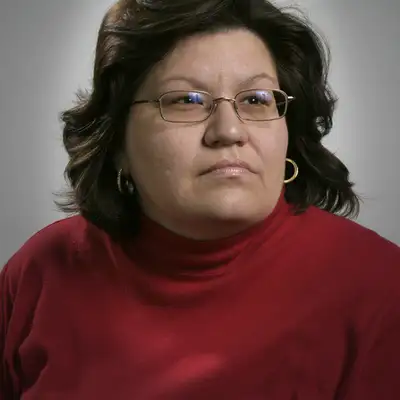
Road To Your Name - Season 6, Episode 8: A visit with Writer, Alicia Elliott
Alica Eliott ep final mix
lisa: [00:00:00] On this episode of Yo Hotana, we're joined by someone who has a definite way with words, author Alicia Elliot. Alicia is from the Mohawk Nation of Six Nations of the Grand River. She is an award winning writer whose first book, a non fiction called A Mind Spread Out on the Ground, was a national bestseller.
Alicia joins us in the studio today. Welcome to the podcast, Alicia. I got through it all. You did good, you did good. So you can introduce yourself more to the audience. Just did it briefly, but we're here to talk about your second book, a novel entitled And Then She Fell, which was released September, right?
Yes. Okay. So just introduce yourself a bit more to the audience if you'd like. Oh, yeah,
Alica: sure. I don't know. I always [00:01:00] freeze up. I'm like, what do I save? And how do I introduce myself further? Yeah. I come from a family with a lot of siblings. I was the oldest of the five by my dad. And my mom was Catholic and she had some kids before that.
So lots and lots of kids basically. And yeah. One of the funny things, and maybe I shouldn't be admitting this, is that the character Alice in the book works at the racetrack, and I used to work at the racetrack, and not exactly everything that happens, nothing that happens to her happened to me at the racetrack, but I just gotta say.
lisa: That was gonna be one of my questions about the racetrack. I have to say that I know some of your siblings, and whenever I think of your family, I think of creativity. I agree. Oh, yeah. Because your family is very creative in a lot of different ways.
Alica: Yeah, my favorite part is my brother John, he does directing and cinematography and film right now.
He, [00:02:00] when he was a kid, he used to like make these weapons out of like cardboard, so he would take the cereal boxes that we had and then just turn them inside out and then just Cut them up into swords and all these things and stuff like that. So I would say he was probably the most creative. I was just mostly just typing things and I wasn't as creative as he was for sure.
I have
lisa: to
Alica: really
lisa: disagree because after reading your first book and getting into this second book I have to say that you are very creative. Well thank you. And you mentioned your brother John, we did have John on as a guest on our podcast as well. Oh, yeah, this season. And so this is going to be a podcast series that's filled with creativity because we have two Elliot's on.
So let's talk about your book. It's your first novel, right? Yeah, it's a fiction. And I think I heard from [00:03:00] another interview you did that it took you a long time to write. It started out a long time ago. Yes. Yes.
Alica: Yeah. Back when I was in, um, university, I was like a young mother and I had just literally had my son a couple months before I started university.
And that kind of experience of being like a young mother amongst all of these literal teenagers who were acting like teenagers in university and I'm just like a mom having to pump breast milk in my dorm room and all of this stuff. It was very isolating and, and it made me realize how different our worlds were, I guess.
And so when I eventually got started. doing fiction for a class I had. I got into the undergraduate creative writing program. I decided I wanted to write about that because it just felt like there was so much that I could I didn't, I felt like I didn't know about being a mother and even like the process of what happens to your body and everything.
But when you're [00:04:00] pregnant and then after, when you give birth and after you, after all of that stuff, I was just like, they didn't tell me nothing about that.
So I was like, I feel like that's something I wish I had known. And so, um, I wanted to write about that. And that's where kind of, um, the, short, it started as a short story. So it was a short story kind of about a young mother who was a writer and who was struggling with connecting with her baby. That isn't necessarily something that I had a problem with, but I could see how it could happen.
Yeah. And so that's where that started. And then it just kept getting longer and changing. And then I started having more and more ideas. And I, my creativity is that I get bored very easily. And so I'm like, I need to do something else. Like, give me something else to do here. I need to think about something else.
I need to be, something weird has to be happening. And that kind of all, I think, comes together in the novel.
lisa: Oh, wow. I could totally relate to that, getting bored easily. And I remember, [00:05:00] I, I'm a writer as well, and I've always wanted to do a novel. And I remember going to the Pauline Johnson house a long time ago, and they had a visiting writer come there, who wrote, her name was Charlotte Gray, she wrote about Pauline, and the book she wrote was really thick, and I remember thinking, Wow.
How can somebody write so much? Like that must have taken so long. And how do you even accomplish that goal? So I asked her, I said, how did you do that when you just start with a blank page? How do you get to the point of a thick book? It just seems so insurmountable. Right. And she said, you just start out writing.
Think of it as a series of articles, or something like that. So you just start out small, then you keep building and adding [00:06:00] to it. Just like you explained that, how your book came to be. Yeah. You just kept adding to it and adding to it. When did you know, as you're writing a novel, I think you would have to keep in your mind everything straight.
Right? Yes. Was that hard to do?
Alica: Not exactly, but mainly because I knew was about a young mother. She's gonna be in the house most of the time. So I was like, okay, that's kind of where the setting is. And in that case I was thinking of like a gothic kind of books where the woman is in the house the whole time and everything.
But, and I was thinking about that in relation to new mothers who have to be there in the house all the time. You're not really outta the house a lot. Yeah. You're just with the baby day in, day out and, and I knew she was gonna be in there. And then part of it was also, okay, what's going to happen while she's in there?
And it really wasn't hard to think of what was going to happen because I was like, okay, she's in it. Who's, who's going to be coming knocking on her door? Who's going to be like, you know, and so having that one setting made [00:07:00] it easier. I think to kind of keep track of what was going on. And then as I was writing, I knew.
That there was going to be a scene that it was building towards. And once I figured that out, then everything moved quickly to go towards that scene. There's like a dinner scene. Um, I would say probably at two thirds of the way through the book. And then I knew there was going to be something that happened after that was totally different.
And so, once I knew where I was going, I could write towards that. And then, A lot of the editing was moving things around that I had already written so that it felt everything was at a good pace and that I was, and my editor was, okay, let's make sure that, you know, she's really lonely to start and it's not like her family's over all the time, so we had to move stuff around.
And so it was, it wasn't too hard to keep track of everything, but I, I kept it very contained. And so even then I could move around what happened in there because they're all in the same, like, in the same setting. So it's just, okay, we'll move this part here and then. Make whatever changes to make it make sense if that yeah [00:08:00] It was easier for me than I would say for like I don't know someone who's writing like a mystery Where you have to keep track of like what clues are coming where and oh, yeah, and all of that stuff Oh that makes sense.
lisa: I was I'm reading the book. I'm I'm really gravitating towards the references to Six Nations, of course, and that was really weird for me because growing up, when I would read a book or a novel, I wouldn't see that in any of the books or novels that were available to us. So it was really nice to see those references and to gravitate toward them and know what they were all about.
Alica: Yes, And that's something that I really loved. I wanted there to be like little Easter eggs for people from Six Nations. So people who knew the community would know what I was talking about or like the different places and stuff like that, that I'm referencing. And so that was like really important to me.
The book is set a lot in Toronto, but like everything in her, in Alice's life, she lived her whole [00:09:00] life on Six Nations. And so I wanted to really make that place feel like as important as I think it does to, to me and to. So many people who live there and who have grown up there. I didn't get to grow up there, but it still was a place that I always felt was really home.
lisa: Yeah, for sure. And yeah, it was just really nice to read all about that and also about I think people who have lived on the reserve and have moved away to say a city like Toronto can relate. to what that isolation is like, and you do reference it in the book, being in a city of millions and millions of people, you can still feel isolated.
Alica: Yeah, absolutely. And I think that when I moved to Toronto, it was very much like that. I don't know. I felt like. Everybody, I don't know, everybody had these little groups, it seemed like, that they were all hanging out with and all these things and I was just like looking around and I was like, okay, where do I fit in here?
And, and I think that also, like, in some ways I did isolate myself because I was ashamed of being a [00:10:00] young mother. I didn't want to have to explain to someone, oh yeah, I had a baby when I was 18 and then I ended up having to, I was going to university, which is a good thing. My, my son is being mostly taken care of.
by basically my mother in law, and we, as much as we went back and forth, I'm, I was sure there were people who were going to still judge me. And so it was, I don't want people to know me because I don't want to feel like they're judging me. So it was in that way, it was more isolating too. And something I did to myself in some way, because I was like, if I don't have to explain to anyone that I don't have to worry that they're going to judge me, but I didn't then, I didn't know that they necessarily were going to.
It's like very, very,
lisa: we're just always sure that they are, right? Yeah. So your character, Alice, there's a lot going on in her head. Yes. As I was reading, I said, there is a lot going on in Alice's head. And then I thought, well, you know what, as a, as [00:11:00] humans, we're supposed to have thousands and thousands of thoughts per day.
But I guess we don't really observe them and acknowledge them as much as Alice does. Yes. So we're not so different from her.
Alica: Yeah, I've always been kind of a fan of a very interior kind of, um, narration styles, especially from first person. That's for me, the benefit of writing a first person narrative is that you get to really be in this person's head and understand them in a way that, that I don't think you really get a chance to understand most people.
And so that's the way that I think, or for me, that's what's so great about that perspective. So I really wanted to dig into that, but then also in some ways, you know, It, it, going back to that, that feeling of, like, gothicness of, like, feeling trapped is the, that's the other thing, right, is when you're in someone's head and you're seeing all their thoughts, sometimes you're trapped in there with them, and it can feel [00:12:00] claustrophobic, and you're like, Oh, my God.
But because I wanted to create that kind of creepy feeling throughout the book, I really want, I thought that was, like, The best choice for that effect. Yeah. And yeah,
lisa: it's, oh my gosh. Like, I probably think like that too, but I just don't sit down and say, oh, this is what I'm thinking, you know? So you write about recurring themes of like mental illness, trauma, racism, to name a few.
Do you think that? As indigenous peoples, we have become, I don't want to say experts, but very knowledgeable in these areas, more so than other peoples.
Alica: I think, yes, but also I think that's because we have had to, like, when, I feel like when you are someone who doesn't have to think [00:13:00] about the things that we're forced to think about, then you can just go easily through life in some ways.
And like, even just thinking about even just running water, right? You don't have to, if you're living in the city and you're not someone who's being literally, like, targeted by the federal government and the provincial government fighting over who has to pay for your water, then it's so much easier to be like, Oh, I'm just turning on water.
I'm just drinking some water. You don't have to think about it even. But when you're living on a res where they do fight over this, and then they'll pay for the water treatment plant, but they won't pay for the infrastructure for the whole reserve. So that even then, not everybody is getting water, even though we technically aren't under a water advisory.
Then that all of a sudden, it's okay, now I have to think about where am I getting this water? And then you have to add that into your day is like going to go get I gotta go get water and stuff in ways that you don't have to. And so I think when you stop and think about that, and you're like, literally, as soon as we get off to res They don't have to worry about that.
That's not a part of their day, that they have to [00:14:00] focus around and move things around to make room for. And so I think with, there's so many things like that when you live on Six Nations or like on any res, I think, and it makes it so much clearer to you. These people are literally saying that you don't deserve it because of where you live, because of who you are, because of these things.
And so it makes it so that you have to face these things in a way that people don't have to face them when they're up there. not in that situation. And so I think that, yes, we are kind of experts in it, but it's also because we see it. We have to see it. We have no choice but to see it. Whereas other people, they can choose not to notice, you know, these things, right?
lisa: Yeah. And we're actually born into it. Yeah. Yeah. You know what? Uh, sometimes I think, gee, what could I be doing with all of that time? Yeah. I didn't have to worry about, um, infringement of my rights every single day. Exactly. It's one of
Alica: those things. It's like, what [00:15:00] would you do with all that time? You know, I can take up so many more hobbies, you know?
Yeah,
lisa: for sure. Oh my gosh. Um, Let me see here. There was, oh, I know what I wanted to get to is talking about the creation story. Oh yeah. . Because the creation story is such a, it plays such a pivotal part in this novel. Mm-Hmm. , right. And it's always there. And then you go back to it at here and there, and I think, you know, a lot of people have their own creation story, so we can relate to that.
And also. Our creation story is so intricate. It's so detailed. It's such a story that has many layers. We've only maybe grown up with one layer of the Sky Woman Falls from the Sky. But there's so much more to it. And I really, I think, Wanted to ask you about how did you decide that you were [00:16:00] going to write the creation story or rewrite the creation story or, like, like, how did you come to that?
Alica: I remember actually, I was talking to my sister, Missy, and she, this was when she was in the in her language program, and she was like, I think, I don't even remember why she had it, but she was talking to me about this version of the creation story that she had heard about, which was talking about basically what happened to Sky Woman before she fell.
And, and it was going into all this detail, and I was like, this is, why have I not heard about this? This is really interesting. And we were talking a lot about, and this is stuff that kind of comes up in the novel, about how there were, have been different versions that have come about as through different times, that I thought that was really interesting too.
And so I was, I had already kind of, um, in the original short story, the character that would become Alice was like a poet, but I'm not a good poet. And so [00:17:00] I couldn't write poems that were good. And so I was like, okay, well, let's do something else here. And that's when, after I'd had that conversation with my sister and was thinking a lot about that, I was like, you know, I think like this is something that maybe she would be wanting to work on.
And it also gave me an opportunity to really talk about in the book, the things that we as Haudenosaunee people have to think about in terms of how do we represent our culture when people have done that for us for so long, and they've said this and that about us, and we haven't had a chance to really engage with our own culture in ways that have been, have been seen just as legitimately as when these non Indigenous academics have come into our communities and written all about our culture, right?
And so I think that Thinking through that allowed me to really talk about the gap between academics writing about us and creating a whole field of anthropology around their studying of us, but we aren't [00:18:00] allowed to talk about that ourselves and get taken as seriously. And I wanted to really talk about that.
And I thought that the way that it made the most sense was for her to be thinking about these things as she's wanting to write a version of the creation story, aware that other people have told this story for us. What would, what does it mean then if we're telling about ourselves and people are going to read into this decision or that decision or say that this is exactly how it's supposed to be because this person said it and not giving us space to be like, no, this is just how one person is telling the story.
That doesn't mean that's how everybody is telling the story. And so I wanted to engage with that. In the writing, and thinking through, too, how oral storytelling is different than writing it on a page where you can't necessarily change it the way that you could if you were in front of an audience, and you're like, okay, I'm telling the story to kids, so I'm gonna alter it so that it's, it makes more sense for the kids, and maybe I'm gonna have, like, sound effects and stuff like that, so they really get into it, and how that's different from telling a story to adults, and maybe you're gonna have some racy jokes that they're gonna [00:19:00] laugh at, so I, I wanted to try to bridge that in the book, And I, and doing that through how she wants to write about the creation story, thinking about the problems with, between oral storytelling and written storytelling and everything was, I think, how I wanted to do that.
lisa: I liked how you analyzed what was going on in the creation story, because that's something that we need to do to bring it into contemporary times. Because this was a woman who was, who did an extraordinary thing. Yeah. And we don't often frame it like that. Yes. Right. As women, hearing that story, we think about that.
Yeah. She was extraordinary. Sky Woman. She was like, really awesome.
Alica: Yes, she was. Yeah. And she was also a single mother. Yeah. I mean, like, we don't even think about it in those terms. terms. But really, when you think about it, yeah, she was a single mother who was then also trying to, [00:20:00] like, take care of her grandkids eventually, by herself still.
You know, all of this stuff, right? Yeah.
lisa: And one part of our creation story that I've heard different oral tellings of as well is actually what happened when she fell. And when I hear that she was pushed, I don't accept I just don't accept that version. Yeah. I can accept that she was curious.
Alica: Yeah, who wouldn't be?
Yeah. You see some weird stuff underneath the tree, you're like, Hey, what the
lisa: heck is going on down there? Because I can relate to that curiosity and I would be peering over too. Right? Yeah. And I can accept the fact that she, Maybe it was her destiny. So there's all these things that, um, when we hear our creation story, we can put our own two cents in.
Alica: Yes. I love that too. And I think that's important. Yes. And that's also why when I got to the point where In the, when she's telling the story and [00:21:00] Sky Woman falls or jumps or whatever you want to say is I did want to leave space for that so that you could pick which one to. So that was something that I was thinking about a lot too because which do you choose?
And I was, this is where I was thinking a lot about storytelling in general and the responsibility of a storyteller and how you, what you decide. says something about you, too, right? And so I wanted to leave that open so that whoever's reading, they get to pick. And then that will say whatever they want it to say about them and the way that they approach life, maybe what they've gone through and how they see things.
I thought that was, that's, I don't know. I just, I love that. Our storytelling is able to be stretched and shaped in different ways. Yeah, it's
lisa: very versatile. Yeah. Because I think for the fact, too, that we've told these stories over and over again for thousands of years. Yeah. Yeah. And what's so fascinating is that our stories When you look at it from that perspective of thousands of years, they're still intact.
Alica: [00:22:00] Yes. Yeah. That's
lisa: amazing.
Alica: It is. And I think it just speaks to the power of the storytelling is that it sticks with people so that they remember it.
lisa: For sure. So in the book, also, you tackle mental illness, that subject, and it's an important theme with you. And what do you hope to do? that people can get from the book from when they're looking at it through that lens.
Alica: I, I've struggled myself with mental illness since I was a teenager, had some pretty severe depression. And I've also had anxiety. I didn't even know what anxiety was until I was like doing a checklist with a therapist or something like that. It was like, do you feel these things? I thought they were just things that everybody felt.
And I didn't realize they were. Things that coincided with anxiety, and even some of the depression, too, I didn't realize was related to that, and I think writing about those things and acknowledging them is important to me because I think that there's so much shame around [00:23:00] these things, and I personally, I'm someone who really firmly believes that for a lot of the things that people feel shame about, like having a mental illness, that shame isn't theirs, it's been put on them by people who are I for different reasons that are not, that have nothing to do with us, and very much of the mindset, like, we don't have to carry that.
And how do we not carry that? By acknowledging it and saying, no, that shame isn't ours. And locating where that shame comes from and saying, that's where it comes from, that's not mine. And, um, you know, this book, I talked more about, um, what are considered, I guess, the the more scary, uh, mental illnesses, like to having to do with psychosis, having to do with mania, things like that make people very uncomfortable.
And I grew up seeing that around me. My mother had bipolar disorder with schizophrenic elements, and so I saw that from the outside for a very long time. And I thought that that was, uh, meant I understood it, but it is it didn't. [00:24:00] And I only understood that when I had a manic episode with psychosis when I was in 2020.
lisa: And
Alica: it was totally different than what I thought it was from what I observed through watching my mother, and I knew. Exactly what was happening around me the whole time. It wasn't like I was like in some other land or something like that. And I think some people assume that is like, Oh, they're not here.
They don't understand. They can't hear what we're saying. They're never going to remember this. So you can say whatever you want, you can do whatever you want. And it's not, but that wasn't true at all. I could. understand everything that was happening around me. I could remember it all. And it was like, the mania and psychosis was like, almost like a transparent overlay on top of what we all considered reality.
And, and so it was me having, seeing both at the same time and knowing, and this is a thing too, I don't think people understand is, I knew that other people couldn't see and hear or whatever the things that I was experiencing, but [00:25:00] I, because of the way that illness kind of creates itself and keeps itself going, it was like, I felt, oh, that was special to me.
That, that was good. And it, in fact, wasn't. And it made it so difficult for me to, to operate. In the world the way that I wanted to and I it was something that was like scary and then when I came out of it, I had to basically face the fact that I was gonna that there's no guarantee that's not gonna happen again that now that it's happened once there's a good chance that it's going to happen again and I had seen it happen to my mother so often and she just didn't want anything to do with any kind of medication or she would take it for a bit and then she would stop and so I saw all of this and I was like I was terrified because that was the thing I was most scared of in my life was having that illness.
I saw how disruptive it was. Again, I, then after I had it, I did the same thing where I was like, why am I feeling this way? Why am I feeling this [00:26:00] shame? If this is something that happens to me, can I make sure that I have, I've talked with my family now so that they know how to approach this and we have a certain level of trust and understanding and even like thinking culturally about what that would mean and how and how people who had those kinds of things were treated when before we had.
Mental hospitals and doctors diagnosing and like all of these drugs and stuff like that you have to take to manage. That's where I think I wanted to really explore that in this book is really and really think through these things. And so I think I wanted for people to See what it was actually like to go through something like that, as opposed to, like, this imaginary way that we think it happens and see how whatever is happening to someone, whenever they're in a state like that, the things that they're saying, the things that they're doing make sense to them because they understand why they're doing these things.
There's a logic to what they're doing and what they're [00:27:00] saying and everything, according to things that they may see and think and understand that you don't, and I wanted that to be made clear through the book. So the things that she's doing, we know because we're in her head why she's reacting this way, why she's saying these things.
The people who are in her life outside of that don't. And so to them, they're like, what are you talking about? And all of this stuff. And so I really wanted to make that clear to hopefully help people understand better what people in that state are going through. So that maybe if they encounter that in their lives.
through different people they know, or if they experience that, then it feels, or that maybe it will help them to treat that person with more respect.
lisa: And I think you accomplish that by being descriptive. Yeah. Yeah. You have to, you have to be descriptive to accomplish that. Yes. Yeah. What exactly is happening?
Yes. And I think like you mentioned, culturally, culturally with mental illness, I think we [00:28:00] had a lot of remedies within the culture. Yes. Yeah. Like ceremonial wise and all those types of things, like our medicine chest was really full. Yes. Yeah. Yeah. Yes. We didn't have to write about it, create a, what do they call that?
Like a diagnosis? Yeah, diagnosis, a DM book. Yes.
Alica: The DSM. Yeah.
lisa: Yeah. A DSM. Yeah. We didn't have to do that because we already had the know how. And even the way we thought of it, I think, is because we had the simplistic concept of balance. Yeah. Yeah. Yeah. Yeah. Yeah. Yeah. Something was just out of balance.
That's all, right? Yeah. Yes. Yeah. I mean, you know, life was much simpler back then.
Alica: Yeah, I think in some ways it really was. And now we have the internet, I guess. Yeah, [00:29:00] that complicates everything. Yes, making it much more complicated. Now we can all have access to everybody's most ridiculous thoughts and whatever they're doing 24 7.
I don't know. How long did it take you to, from beginning to end, to um, complete the book? When I started writing the short, when I wrote the original short story I think that was back in 2008 And then I just kept putting it away. I would write a little bit more and I would put it away. I'd write a little bit more and I would put it away.
And when I wrote my first book, I was like, okay, well, I got to just focus on this. I can't focus on that. When I finished that, I was like, okay, maybe I'll write a book of short stories. And so I brought it back out and I was, as I was looking at it, I was, I just don't know how I'm going to get this to the point where, uh, I want it as a short story.
I was like, maybe it's a novella. So it's just going to be like a 90 page short story. And then it occurred to me that the, what is the prologue? Is that was actually a different short story with a different character. And I [00:30:00] realized that I could pull them together and, and kind of, make it more tense, make it a little bit more horror, add some sci fi, make it fun for me.
And so when I figured that out and then I sat down to write it, I originally had, based on the short story and then this thing that I thought was going to be a novella, I think they had around 30, 000 words or something. And so I was like, okay, I need 60, 000 more words. And so I started in January, I think it was of 2021.
And then I think I had a full draft by May. I wrote it pretty fast. Once I actually knew what I was doing with it. But then I had to write another draft and another draft. So I've done probably at least eight drafts before it got to this. Yeah. That's discipline.
It's reluctant discipline. I am a very big procrastinator. I can relate to that.
lisa: So we've been talking a lot [00:31:00] about the
Alica: book. Can you read some of the book? Yeah, I'm just going to read from the prologue because I think that's, you know, why not just start at the beginning? Maybe that's easier. And so the prologue is called Around the Riverbend, mostly.
Alice never seemed to hear the microwave beeping, not even when she was three feet away from it, feet propped on the kitchen table as she painted her toenails neon green. It didn't matter how loud or how insistent her ma was when she called her to dinner, either. She'd saunt her into the kitchen whenever she felt like it, even if it meant her food was cold and congealed on her plate.
At first, her aunt Rachel thought, Alice's hearing was to blame. She did sit alarmingly close to the speakers at powwows, after all, and her music pounded through her headphones so loud even the people she passed could hear each note. But a free hearing test confirmed her problem was not and had never been her ears.
She could hear the microwave perfectly. She could hear everything [00:32:00] perfectly. Quite simply, Alice deliberately chose to ignore what she didn't want to hear. Either the most teenage of all ailments, or the most human. For who wants to hear an incessant hammer banging down on one's carefully constructed version of real life?
Who wants to admit there was a moment where they saw disaster coming, but chose to do nothing? Only for the impending wave to crest and crash, forcing their carefully constructed version of real life to give way and collapse entirely. This is probably why, despite the trail of girls Mason Jameson left behind him like breadcrumbs in the forest of masculinity, girls with mascara rippling down their teenage cheeks, with heartbreak and hatred now trapped in their very marrow, Alice still desperately wanted to follow that trail straight down.
to him. What choice did she have? She was months away from becoming a faceless freshman and [00:33:00] he was one of the coolest boys at J. C. Hill Elementary. There was something very chic about the idea of holding hands through the halls and getting pulled against his chest while he smoked, even if she knew from other girls that he repeated the most boring stories and his cigarette ash got caught in their hair.
It might not be fulfilling, but it'd be validating, the way male attention could be. That was good enough, probably. I'm gonna jump ahead really quickly to where Alice is at the Speedway, where she's working with her cousin Melita. You'll never guess who's hanging around the food stand, Melita said one night.
Alice was under the bleachers, tearing apart the strips of 50 50 tickets she and Melita had sold. The repetitive motion calmed her, so she offered to do it for her cousin, who was, it must be said, pretty lazy, at least when it came to work. Gossiping, on the other hand, Melita took very seriously. Alice stopped ripping tickets and looked at [00:34:00] her cousin.
Melita's ears turned a red that rivaled her already blushed cheeks, the way they did whenever she knew something you didn't. I don't know. Nelly Furtado? Don't be stupid, Alice. What would a queen like that be doing in a place like this? Watching the races? Melita ignored that and smiled. Mason Jameson, she said, savoring the words as they rolled off her tongue, weighing the effect of every syllable.
Alice immediately felt lightheaded. No way. He'd never waste a Friday night here. Go look for yourself. She peeked out from the bleachers, and there he was, leaning against the food stand, smoking. Her breathing stopped as she choked out two words. Holy shit. Alice stared. She obviously remembered him. Who wouldn't?
Pulling his chin. or puffing his chest on playgrounds and in parking lots, demanding and commanding eyes with every step of his nearly six foot tall frame. It'd been two years since he'd left J. C. Hill for [00:35:00] Pauline Johnson Collegiate Vocational School. He was definitely taller now. His movements were smooth and confident, almost feline, as he lifted his cigarette to his lips.
When she got older, she would realize how much of this was a performance, how much was lifted from James Dean and early Marlon Brando movies, which, unbeknownst to all but his mother and sister, Mason studied fastidiously. Even practicing the movements in front of the mirror, the way Alice herself practiced smiling in the perfect way to hide her snaggle tooth.
The self consciousness that came with puberty pushed them both into odd shapes and awkward poses, but at 13, Alice didn't notice the effort it took other people to look effortless, just her own, and so, she only hated herself for it. Alice also had no way of knowing at the time that Mason's stock had fallen considerably since he'd made the leap to high school, as happened with all Native kids once they stepped off the res, and into the mostly white high schools they were forced to attend in neighboring cities.
[00:36:00] Had she known all of this, It's hard to say whether she would have proceeded in quite the way she did. He just broke up with Nancy, so I bet he's looking for a new snag, Melita said, needling. I don't know, she started. I don't know, she started. Well, I do. What are the odds your crush would end up here right after a breakup?
It's fate. You gotta go over there and ask him for a smoke. Now, she grabbed Alice's arm and dragged her towards the food stand. Alice tried to pry her fingers off, but it was no use. The creator himself couldn't stop Melita once her mind was made up. But I don't smoke, Alice whispered, or snag. Melita cackled, you do now, honey.
She pushed Alice toward Mason, who was, thankfully, staring down at his black razor phone. Alice managed to catch herself on a big blue metal garbage can before running into him, making a terrific clang in the process. And Mason looked up, saw Alice, then took another drag on his cigarette. Hey, he said. Hey, [00:37:00] Alice said, her throat raspy and dry.
Got a smoke? I'm down to my last one. Oh, but uh, we have lots of trading people in it. Alice looked down at her shoes, her heart racing. What do you want for it? That depends. You busy tomorrow night? Everything was happening so fast, Alice couldn't think. Was she busy? Probably not. She was never busy, but she could tell Mason that.
I could make time. That sounded pretty cool. Like something the sort of girl Mason wanted to hang out with would say. Then this is yours. He pulled out a pack of Sago menthols and handed her his last cigarette. His hands were so big, they looked like they could crush her head between them. Stop thinking and just be cool, Alice told herself, as she placed it between her lips and pursed them expectantly.
Mason produced a lighter and flicked the head ablaze. Luckily, Alice remembered Melita once told her the secret to faking smoking. Don't inhale. Put your number in here, Mason said. He handed over his cell phone. [00:38:00] He was saving her number under the name Hot Racetrack Girl. She debated typing her actual name in, but decided against it at the last minute.
She didn't want to look too pushy. See you tomorrow, he said, as he took his phone and backed away, smiling at her. She watched him spin around and continue toward the bleachers. God, she thought, even the way he walks is sexy. Melita was beside her almost immediately. So what happened? We're going to hang out tomorrow night.
Are you kidding me? You're hanging out with Mason Jameson tomorrow night? The girls are never going to believe this. At that exact moment, Alice remembered, she'd agreed to babysit for her Aunt Rachel. Fuck, I forgot. I'm babysitting Alice tomorrow. I swear to fucking God, Al, if you throw away the chance to lose your virginity to Mason Jamison for a babysitting gig, I will kill you myself.
Do you really think we'll have sex? Of course! Guys like Mason basically need sex to live. Um, and I will edit there for sure. [00:39:00]
lisa: I thought you said, I'm gonna edit there. Maybe I should have. Oh my goodness. So do authors read their own books for the audio version?
Alica: Sometimes. I didn't do it for mine just because they did it really last minute and so they were like, oh, can you come like to Toronto for two weeks next week?
And like, when you, I did my first audio book and it's really weird. So, when you're recording an audio book, it doesn't matter for everybody, at around three or four hour, the three or four hour mark of them just reading straight, even with breaks, all of a sudden they'll keep, like, making mistakes every single time they go to talk, and so they stop, and they're like, okay, we're done for the day, so that's why it takes two weeks, and so it's, you go in for three to four hours every day for two weeks, and I was like, I can't do that with such short notice, and I didn't, I didn't want to, Like, I didn't even know if they were going to put me [00:40:00] up in a hotel or not, so I was like, I can't, am I going to, like, live with my brother who's in Toronto for two weeks?
No! He's going to get so sick of me. So, I was like, I can't do it, but maybe, like, maybe for the next one. It would have been great if you did, because you read it so well. I would have loved to, but I didn't, and now I have a car, I didn't have a car then, so now that I have a car, maybe I would have done it, but.
Not, not then.
lisa: Yeah, it's hard to read out loud. It is. For a long period of time. Yeah. And do all the intonation, and like, you have to read it like it's
Alica: written, right? Yes, yes. And I've read, or I've heard so many people say that. read aloud and they're just like, and I'm like, Oh my God, I can't do that. Cause I would just, I would be embarrassed to hear myself reading it.
Then I can't read it like that.
lisa: So in one page there, I remember hearing [00:41:00] a reading. It's at the end of a chapter and you say, and you write Gwandin. And I'm like, okay, Gwondon, is that Cayuga? And then I'm like, or is that like Skodan? I'm
Alica: gonna ask her when she comes over. I think it was something that I would always hear my Aunt Ruby say, and she would always say it to the dogs.
Whenever we would go on walks, we'd go like walking down like, down Fifth Line, all the way. All the way down past Chiefswood, and of course, all the Rez dogs would be coming, and she'd be like, Gwondon! Like, it would just be like that, so.
lisa: That's what I
Alica: thought
lisa: happened. That's so funny. You gotta get a t shirt.
You gotta put that on a t shirt. So, are you on a book tour with this book?
Alica: I did do some, like, literary festivals that were in different places, and I was just traveling a lot, and I don't travel well. Like, I get [00:42:00] so stressed out when I'm going to an airport until, like, I'm literally on the plane. And so, I was not super happy.
I don't sleep well in hotels either, so, like, I don't get good sleep and everything, and I'm just like, anxious all the time, every time I have to get on a plane and everything, but thankfully that is, that finished up at like the middle of November, so I don't have to do anything for a while.
lisa: I
Alica: think I have a couple things I have to do in spring, but they're close by, so I'm not too worried about it.
So it's like, in Hamilton and like, I think, Brampton or something?
lisa: Oh yeah. So, not far. So what about being a prolific writer, are you on to the next thing now?
Alica: I am on to it, I've been like, but I'm, like I said, I'm a procrastinator, and so I have to research this, I have to read this book to research this different, this particular thing before I sit down and write.
And now I'm getting to the point where I know I have to just sit down and start writing. But. I've told myself I'm going to allow myself to procrastinate with reading books until the end [00:43:00] of the year. And then in January, I have to actually sit down and start doing it. So
lisa: when you do write, do you, are you very disciplined?
Do you get up early and you say, okay, I write this many hours a day or just when it strikes you?
Alica: I have to. set limits for myself. So I would be like, okay, I have to write at least 500 words today. And if I, if it's all, like, I squeak by and I'm like, okay, I literally just wrote 500 words, that's great. And then I will be done for the day.
But some day, some days I'll be like, oh, I'm in the zone. And so I'll like zoom past 500 words and keep going. And those are good days. And I wish they were all good days. But unfortunately, they are not. So I have to do that. And I'm also terrible in that I don't, there are writers who can just write and then keep going S from the start to the finish.
I don't do that. I ha I edit while I write. So like I'll start reading something and then I'll be like, I, that, that word's not right. Or like, I need to rearrange this, or whatever. So it takes even longer. .
lisa: Yeah. I write, I write like, I write like that as well. Yes. Yeah.
Alica: I, and I, I do [00:44:00] feel like it does mean I have less drafts, but it takes longer
lisa: Yeah. I think. My first draft is the best. Yes!
Alica: I'm sure it is.
lisa: Only my editor doesn't. Your editor, they don't,
Alica: we don't talk about editors. Yeah, for sure. So, okay, where can people find your book? I feel like in, you can get it in certain places, but I feel like the best place to get it would be from Good Minds because they are such supporters of Indigenous writing and Indigenous stories.
So, I would say that's the best place to get it, but then, you know, if you're, if you have a local bookstore, get it from the local bookstore. I mean, it is on other places, like Amazon, like Chapters and stuff like that. If you have to. to you can order from them. But I mean, I always encourage people to go local as much as they can because these big companies, they [00:45:00] don't need it.
lisa: They're good. Yeah. Anything else that we didn't talk about? We talked about a lot. I know. I know. I don't know. I guess that's everything. Well, the invitation is open when you're finished your next novel.
Alica: Or maybe when you finish your novel, I'll come in and I'll interview you. That would be great.
lisa: Exactly. I don't know when that's.
That's going to be, oh my God, wow. This has been great visiting with Alicia Elliott, Niawe for joining us on the podcast. Niawe, Niawe for having me. Onigiwahi.
This has been the Yohate Negasuna, the Road to Your Name podcast series.
intro: There
lisa: are 10 episodes in this podcast series. Let's meet again on the next episode. [00:46:00] If you would like to learn more about our organization, Aboriginal Legal Services, and the programs and services we provide, please visit us at our website, www.
aboriginallegal. ca.
And if you feel inclined and would like to make a donation, you can click on the word donate located at the top of the homepage of our website. You can also visit us on Facebook at road to your name. This has been the Ohate Nega Sona, the road to your name podcast series.
intro: Yo, honey,
yo.
Creators and Guests