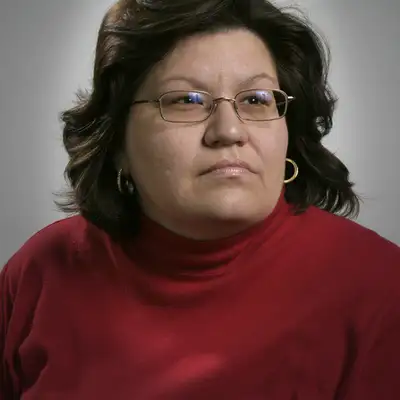
Road To Your Name - Season 6, Episode 10: A conversation with Kathy Neil, Deputy Commissioner for Indigenous Corrections
RTYN Kathy Neil
Lisa: [00:00:00] Sego, Sewagwego, greetings everyone. Welcome to our Yohate Negasuna, the Road to Your Name podcast, focusing on Haudenosaunee cultural topics recorded on Haudenosaunee territory.
intro: Yo ho, he yo, Yo ho, he yo.
Lisa: Our podcasts are produced by Aboriginal Legal Services with the technical assistance of True Seed Media.
My name is Lisa Venevry from the Mohawk Nation and the Wolf Clan. I'm the co host. Coordinator of the Una The Road to your name program, and the host of the podcast.
This is the Una the Road to your name podcast series.[00:01:00]
Today's guest has joined us by telephone.
Canada's prison system has its problems, especially with how it treats the Indigenous people. population. In 2001, Indigenous people made up 20 percent of the prison population, while comprising only 3 percent of the overall population. Now, those statistics are higher. Until now, there hasn't been a dedicated prison population.
person to tackle these issues for Indigenous people who are in the prison system. On this episode of Yohate Negosuna, we're joined by someone who has spent a better part of her career behind bars. Kathy Neal has worked in corrections for almost three decades, starting as a correctional officer. And was even the warden at a penitentiary in Saskatchewan.
Kathy is Métis from Prince Albert, [00:02:00] Saskatchewan. She joins us by telephone today. Welcome to the podcast, Kathy. Hi
Kathy: Elisa, thank you for having me.
Lisa: Oh, great. It seems that everyone but Correction Service Canada knew there was a need to create a position of the Deputy Commissioner for Indigenous Corrections.
And after 23 years of recommending it, here you are.
Kathy: You know what, I'm very excited to be in the position. I feel I hold a great responsibility to community and to Corrections, and I'm privileged to be the first Deputy Commissioner
Lisa: for
Kathy: Indigenous Corrections.
Lisa: It's always exciting, but also nervous to be the first of anything.
Kathy: You know what, it really is. Having said that, I really do see it as an opportunity. And an opportunity to really mold the stage for anyone to come after me as well as that opportunity to create the role. [00:03:00]
Lisa: Yeah. And the, and really the first position, you really don't have a blueprint of, about anything. So you can sort of create your own journey.
Kathy: Yes. And I think that's the key that I can really zone in on those areas of importance and identify them and really highlight those target areas. So honestly, I really do see it as a significant opportunity to be the first deputy commissioner.
Lisa: So we're here to talk about what's going on in prisons in this country with the ever increasing indigenous population.
The population of indigenous people in prisons keep rising now. What is the current statistic?
Kathy: So the current level of representation of indigenous in corrections in the federal system is about 32%. The rate of admission into the system is In 22, 23 [00:04:00] was at, I believe it was 33%. And so I just highlight that because I think we all need to remember that the over representation of indigenous.
people in the justice system is really a reflection of the systemic disparities that all level of governments have to work to fix, and that we can't lose sight of the work that we need to do at the front end and try and ensure that they don't enter into our system.
Lisa: Yeah, for sure. So you've been in the position about a year now, and you have a team of 25 that you work with.
And all they do is look at indigenous issues in the prison system. So what have you been doing in the past year? Like, what is your strategy?
Kathy: There's a number of key priorities that we have within my sector. One of those is in relation to Raising the voice of the elders [00:05:00] and raising the understanding of the impact of the elders, the impact of their interventions within the system and their teachings.
And so that's been one that has been really near and dear to me. We've done a significant amount of engagement with the elders. We had the opportunity actually to gather approximately 120 elders that work with CSC At the National Gathering of Elders in Edmonton in October, and it was a really good opportunity to get their direct input, listen to their suggestions for improvement, and then be able to develop an action plan going forward based on their input.
Lisa: And so what have the elders been saying?
Kathy: You know what, they would like us to, one, raise the awareness in terms of the interventions that they do. Um, [00:06:00] CC is a large organization, and you know what, we do have a lot of turnover. And so, things that I think may be basic or that everybody knows, such as the importance of giving protocol to an elder, Or what it means to an indigenous person to smudge.
We need to continue to raise the understanding of those cultural activities and the importance of those activities. And so that's one of the things that I've been tasked with by the elders. And so we are actually writing a guide in terms of how to work with an elder and explain the importance of some of those ceremonial aspects, as well as how to.
Ensure that those aspects are not interrupted unnecessarily and so, uh, we need to just make sure that we're educating our staff on those things on a continuous basis.
Lisa: Oh, yeah, that's really important and I wanted [00:07:00] to ask about the, the position of elders specifically. Now in our indigenous communities across Turtle Island, we really do have, we have people in our communities who are, uh, knowledge keepers.
And they wouldn't necessarily consider themselves elders, that terminology, but they're very culturally knowledgeable. And some of them have even paired their cultural knowledge with degrees in linguistics or criminology or counseling, things like that. Would you consider these types of people, even though they don't fit into the category of elders, would you consider them to be beneficial to the prison system?
Kathy: So we do have, as I said, a number of elders. We also have spiritual advisors who I think would fit into that definition that you just shared with me. [00:08:00] They don't consider themselves an elder, but they are very. culturally knowledgeable and have a lot of experience and teachings and some of them a lot of education to impart not only on the clientele that we serve, but also.
On the management and the staff as well. So yes, we do consider them as well.
Lisa: What about the kind of programming that is done in the prisons? Now, are you going to be looking at maybe increasing that or changing it from what's being done currently or in the past? Or can you talk a little bit about that?
Kathy: So we do have Indigenous stream of programming that we deliver on a regular basis that is available at all institutions. We also have different cultural activities and interventions depending on where you are across Canada. In terms of what are the practices in that area, having said that, [00:09:00] we've actually done a significant amount of engagement with different indigenous communities and organizations, both for cultural supports upon release, as well as access to different programs.
And I'm actually quite excited about some of that engagement and have seen some of the impacts of those programs, such as. Horse therapy program that we do at our Women's Healing Lodge, as well as at one of the median security institutions in Grand Cache. It is a very trauma informed program, and it is just hugely impactful.
So, very excited about that programming as well.
Lisa: What about any brand new initiatives? in addition to that, that you're thinking of and maybe haven't put into place yet.
Kathy: Um, you know what, we [00:10:00] do have some initiatives such as the mother child program, which is, it's not a brand new initiative, but what we've done is we've expanded the definition of mother or parent.
And we've expanded that definition in order to respect and acknowledge some of the extended family relationships, especially in the indigenous culture, where it might be grandma or auntie who raises that child and so that they are eligible to participate in that mother child program. We've expanded that definition.
Lisa: And with the female population and specifically, that statistic is much higher for Indigenous people, is it not?
Kathy: You know what, that population is growing at a high rate. We are working, and again, lots of programming in the women's institutions. Programming is really based, [00:11:00] creating choices, uh, basis. And so, uh, We are working to, again, address their needs and rehabilitate them as early as we can and as safely as we can and make sure that they have the supports that they need when they're transitioning into the community.
Lisa: And with the Section 81, the Healing Law, just, can you just explain to our listeners what that program or that law is about and how your initiatives will fit into that?
Kathy: Yeah, so Section 81 is a section in the Corrections and Conditional Release Act. That gives the minister the authority to transfer supervision of federally sentenced indigenous people to a community or an indigenous community organization or community.
And so [00:12:00] what that means is that that person serving their sentence. Their supervision would be transferred to that indigenous organization for them to continue to serve their sentence. And so, the Section 81 Healing Lodge is really an intensive, culturally based program to assist in rehabilitation and reintegration into the community.
Their program and their supports are all very important. culturally based and have really been seen to have very positive results in terms of that ability to successfully. not come back to the, to federal incarceration. One of the areas, uh, or the results in that area is that over 81 percent of indigenous offenders have successfully reached their sentence expiry date and not returned to federal incarceration.
Lisa: [00:13:00] So they have a proven track record, the healing lodges. Are you looking at increasing the number of them?
Kathy: We are working to increase the number of section 81 agreements in those areas that are underutilized. So such as, uh, Quebec and Atlantic and Ontario. So we're working to create new Section 81 agreements in those areas.
We're also working very hard to make sure that we're fully utilizing the Section 81 beds and Healing Lodge beds that we have. And I'm very proud to say that in 22 23, there was uh, 28 percent increase in the number of the utilization of those debts.
Lisa: Well, that's good news. What, where does, I know we have the Gladue law in the courts today with the Gladue reports and [00:14:00] everything.
Is the prison system utilizing these reports within the prison system, say, for parole hearings?
Kathy: We're available. We do consider the GLADU reports in the correctional planning, but we also, within the Correctional Service of Canada have Indigenous social history, where we do take into consideration all of the social history factors in relation to Indigenous peoples.
And all of those factors are considered by decision makers in all the decisions that we make within the service.
Lisa: Um, well, let me ask you this. Since you've been in this position, I know you spent the majority, if not all, of your career in corrections in this area of work, and you've had many experiences.
What has been your biggest challenge in this current job?
Kathy: You know, this may [00:15:00] sound a little bit Pollyanna. But, uh, I have had a really warm welcoming into this position and I really do feel like I'm in a time and space where people are open to new approaches. People want to hear about the importance of ceremony, the importance of elders, and they want to support that.
And so, I feel very supported by our commissioner and our executive committee. I'm not sure that I have really hit a significant roadblock to date. We have a lot of work to do. And part of that is to update some of our policies. And so we are updating the commissionary directives, uh, 701 in relation to indigenous interventions.
We're doing a lot of work with engagement with indigenous communities. We're working again [00:16:00] on the section 81 action plan. Um, I'm really working to make sure that we are fully utilizing our healing lodges and transferring at the safest point in time, indigenous offenders to a lower security when appropriate.
Yeah. So I don't feel like I have hit a wall as of yet.
Lisa: Well, I hope you never do.
Kathy: Me
Lisa: as well. You've been in corrections a long time. That's a hard sector to be in. Because you see a lot of trauma. You see a lot of negative things. I'm sure. And so, um, You've spent so many years in this type of environment.
What do you enjoy about your job? I
Kathy: really enjoy that I get to contribute to better outcomes for Indigenous people. That I act, I am [00:17:00] sitting, participating in decisions. Influencing policy and developing policy that is targeted to better outcomes for indigenous people. And I really work with an employee base and an organization that this is one of the key priorities.
And so, again, although it's a significant responsibility, I also think it's a privilege to be able to do this.
Lisa: Mm hmm. So you like getting up and going to work every single day. It's exciting. You know what? I
Kathy: really do.
Lisa: That's great. When we can say that about what we're doing and we're contributing and it's rewarding, what more can you ask for, right?
Kathy: Yes. And, and, you know, I say that to my staff all the time that I love that I can create new things that I can influence decisions and I can champion indigenous recruitment. [00:18:00] And when I get tired or when I don't think I can do it anymore, then that'll be the time to retire. But I'm, I'm not anywhere close to that as of yet.
Lisa: Well, Kathy Neal, I hope you make your mark on, on, on being the Deputy Commissioner for Indigenous Corrections. It's Big shoes to fill because nobody's filled them before nobody's even had the shoes on before.
Kathy: So I wish you so much, Lisa.
Lisa: I wish you well in your position. And I hope to see that things begin to change for our indigenous people who are incarcerated and that the statistic does begin to go down.
Kathy: I hope so too.
Lisa: Niawe, thank you for being a part of our Road to Your Name podcast today. And I hope you become a fan of the Road to Your Name podcast to be a listener.
Kathy: Yes. [00:19:00] I've listened to a few of them. I've listened to a few of them and they're very interesting.
Lisa: Oh, great. So, um, Niawe, thank you so much, Kathy, and have a great day.
Kathy: You too, Lisa.
Lisa: This has been the Ohate Nega Sona, the Road to Your Name podcast series.
intro: There are
Lisa: 10 episodes in this podcast series. Let's meet again on the next episode. If you would like to learn more about our organization, Aboriginal Legal Services, and the programs and services we provide, please visit us at our website, www.
aboriginallegal.
intro: ca.
Lisa: And if you feel inclined and would like to make a donation, you can click on the word donate located at the top of the [00:20:00] homepage of our website. You can also visit us on Facebook at Road to Your Name. This has been the Yohate Nega Sona, the Road to Your Name podcast series.
Creators and Guests