Road To Your Name - Season 7, Episode 4: A conversation about land with Katsi'tsakwas Ellen Gabriel and Sean Carleton, authors of When The Pine Needles Fall
Reclaiming the Narrative — Katsi’tsakwas Ellen Gabriel & Sean Carleton on When the Pine Needles Fall
Road to Your Name | Season 7: Episode 4
This episode was recorded in December 2024.
This episode was recorded in December 2024.
Episode Description
In this episode, Lisa sits down with two co-authors of a landmark new book: Katsi’tsakwas Ellen Gabriel, Kanien’kehá:ka (Mohawk), Turtle Clan, from Kanehsatà:ke — land defender, filmmaker, artist, and human rights activist — and Sean Carleton, settler historian and professor of History and Indigenous Studies at the University of Manitoba.
Their book, When the Pine Needles Fall: Indigenous Acts of Resistance (Between the Lines, 2024), is the first account of the 1990 Kanehsatà:ke Resistance told from Ellen’s own perspective. Written as a conversation, it traces her life before and after the 78-day standoff — when Mohawk land defenders stopped the municipality of Oka from bulldozing a cemetery to expand a golf course — and her decades of advocacy since.
What emerges is a conversation about what the media got wrong in 1990, the central and largely erased role of women in the resistance, what it means to hold land as identity rather than resource, and why Ellen believes the international stage — not Canadian courts or legislatures — is where Indigenous sovereignty must be defended. This is a conversation about truth-telling, the long work of decolonization, and what it means to live a life committed to the land and to future generations.
What We Talk About
- How the book came to be — Sean meeting Ellen during his PhD work and proposing a conversation-based format to uplift her voice and reclaim her own narrative
- What the media got wrong in 1990: the resistance was not a “warrior society” story — it was women, children, and elders defending their home, and women went to the front three times when police arrived
- How the focus on men in camouflage made it easier for governments and media to label land defenders as terrorists and obscure the real issue: 270 years of land theft
- The role of women as title holders to the land in Haudenosaunee governance — and why any negotiation over land must go through the women
- How colonization deliberately undermined the political authority of Indigenous women, including through imposing band council systems and patriarchy
- The windows of opportunity — and dysfunction — during the 1990 negotiations, and Ellen’s direct account of what it felt like to have weapons pointed at her community while the government said it wouldn’t negotiate “with a gun to its head”
- Self-care during crisis: what survival looks like when there is no time for it, and the elders who helped Ellen stay grounded
- Sean’s framing of his role: not ally, but “co-conspirator” and “uplifter” — and how the Two-Row Wampum offers a model for non-Indigenous people in this work
- Ellen’s quote from the book: “For Onkwehon:we peoples, the land is precious and priceless. It contains all aspects of our identity.” — and what that means for Haudenosaunee language, clan systems, and relationship to all of creation
- Deskaheh’s 1923 journey to Geneva and why Ellen continues that tradition of international advocacy at the United Nations — including the push for Indigenous nations to have permanent observer status
- Why Canada’s domestic record means the international level is the only viable arena for protecting Indigenous rights
- Ellen’s art practice as survival — meditative, absorbing, and a thread of continuity throughout decades of hard work
- Sean’s reflection on becoming a new father during the book’s release, and how it sharpened his sense of responsibility to build a different world
- Ellen’s current work: a third documentary about Kahnawake’s support during the 1990 resistance, and her continued work on land defense, climate, and youth mentorship
About the Book
When the Pine Needles Fall: Indigenous Acts of Resistance by Katsi’tsakwas Ellen Gabriel with Sean Carleton (Between the Lines, September 2024). With a foreword by Pamela Palmater and afterword by Audra Simpson. The book has been longlisted for CBC Canada Reads and Ellen’s companion documentary film Kanà:tenhs – When The Pine Needles Fall won Best Canadian Short Film at the International First Peoples Festival and has been recognized at over 30 festivals in a dozen countries.
Guests
Katsi’tsakwas Ellen Gabriel — Kanien’kehá:ka (Mohawk), Turtle Clan, Kanehsatà:ke. Spokesperson for the Kanien’kehá:ka community during the 78-day Kanehsatà:ke Resistance of 1990. Documentarian, visual artist, Indigenous human rights and environmental rights activist. Former President of Quebec Native Women. Board member of the National Executive Steering Committee for Indigenous Climate Action. 2024 Grand Prix recipient from the Conseil des arts de Montréal — the first Indigenous artist to receive the prize in its 38-year history.
Sean Carleton — Settler historian and professor of History and Indigenous Studies at the University of Manitoba, Winnipeg, Treaty 1 Territory. His research examines the history of colonialism, capitalism, and schooling in Canada. Author of Lessons in Legitimacy: Colonialism, Capitalism, and the Rise of State Schooling in British Columbia (UBC Press, 2022).
Resources Mentioned
- When the Pine Needles Fall: Indigenous Acts of Resistance — available from Between the Lines Press and wherever books are sold
- Kanà:tenhs – When The Pine Needles Fall — Ellen’s award-winning documentary film (2022)
- Strong Spirits — Ellen’s first documentary film, on Indian Residential Schools in Canada (DOC NYC 2021)
- The Women’s Nomination Belt — Haudenosaunee wampum belt referenced in conversation
- Deskaheh’s 1923 mission to Geneva and the League of Nations
- UN Declaration on the Rights of Indigenous Peoples
- Aboriginal Legal Services — aboriginallegal.ca
- Support the show: click Donate at the top of the ALS homepage
- Facebook: Road to Your Name
Update: Katsi'ksakwas Ellen Gabriel recently participated on the panel of judges of the 57th session of The Permanent Peoples' Tribunal (PPT) on Indigenous Children held in Montreal from May 25-29, 2026. (permanentpeoplestribunal.org)
Road to Your Name is produced by Aboriginal Legal Services and hosted by Lisa VanEvery, Mohawk Nation, Wolf Clan. Recorded on Haudenosaunee territory with technical assistance from True Seed Media. Niá:when for listening.
Creators and Guests
Host
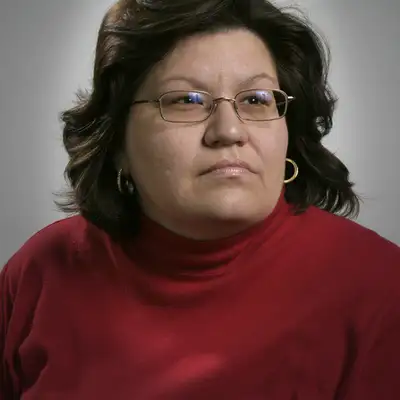
Lisa VanEvery
Lisa has worked for Aboriginal Legal Services for sixteen years. She began hosting the Road To Your Name Podcast in December 2020.