Road To Your Name - Season 7, Episode 9: A conversation with death doula, Diane Boots from Iahki'nikonhketskwas (Lifting Their Minds Center)
Download MP3Road to Your Name | Diane Boots — Lifting Their Minds: A Conversation on End-of-Life Doula Work
This episode was recorded in April 2025
EPISODE DESCRIPTION
What does it mean to be present for someone at the very end of their life — and what does our culture already know about death that we've forgotten how to practice? In this episode, Lisa speaks with Diane Boots, director of Iahki'nikónhkétskwas (Lifting Their Minds Center) at Akwesasne and an end-of-life doula, birth doula, and pipe carrier.
Diane has supported over 200 births in Akwesasne, and after a near-death experience of her own, she found her way to death doula work following a wake where a grieving family felt abandoned by their community. What she shares is unflinching, deeply practical, and quietly beautiful: the legal documents every family needs before someone passes at home, the physical realities of how a body naturally prepares for death, how hearing remains for roughly thirty minutes after a person passes, and how Haudenosaunee teachings — particularly the Condolence — already contain almost everything we need to know about how to grieve and how to show up for each other.
This is a conversation about honoring the spirit's transition the same way we honor its arrival, and about what gets lost when a circle community starts taking care of only its own.
WHAT WE TALK ABOUT
- What an end-of-life doula actually does, and how the role mirrors the work of a birth doula in providing education, presence, and support through a major transition
- The essential legal documents every family needs before a loved one passes at home: DNR, will, medical proxy, power of attorney, and executor — and what happens if they're missing
- Why feeding a dying person, however loving the instinct, can cause real physical distress as the body's digestive system naturally begins shutting down
- Encouraging patients to keep living during their final transition: doing something they enjoy, inviting students to keep learning from them, treating the dying process as something other than simply lying in wait
- The medically documented fact that hearing remains for up to thirty minutes after a person passes — and what that means for how families say goodbye
- Diane's own path into doula work: more than 200 births supported in Akwesasne, a gift she describes as "the coming and going of the spirit," and two personal near-death experiences that removed any fear of dying
- The wake that changed everything: a grieving family devastated not by their loss alone, but by a community that didn't show up — and what that taught Diane about the responsibility of a circle community
- Writing the grant that funded Iahki'nikónhkétskwas (Lifting Their Minds Center), with support from the Mohawk Council Healing Grant, the Mohawks of Akwesasne Trust Settlement Fund, and CKON radio
- The difference between training community members in end-of-life care versus certifying professional doulas, and why Diane intentionally keeps her community classes informal and accessible
- Hands-on training that includes wearing adult briefs and being repositioned in bed, so caregivers understand what the experience actually feels like for a patient
- A breakdown of funeral options most people don't know exist: green burials, home funerals without embalming, and what New York State law actually requires (and doesn't)
- The spiritual dimension of dying: the parallel between the energy felt at a birth and the energy felt as a spirit prepares to leave, and a simple hands-on exercise anyone can try to feel that energy themselves
- A story about a man in his final days who was frightened by visions of his deceased parents in the room — and the peace that came once he understood what was happening
- How Haudenosaunee Condolence teachings already map out the grieving process, down to the specific instruction to change your dinner time so you stop watching the door for someone who isn't coming home
- The post-COVID shift Diane has observed in community caretaking, and her concern about families pulling inward at exactly the moment connection matters most
- The "compassion pouch" Diane created for home care workers: essential oils, tobacco, sage, sweetgrass, and a written prayer to use between patients, so caregivers have a moment to ground themselves before moving on to the next family
- How Diane cares for herself doing this work, including the support of her husband, learning to allow herself to rest, and finding peace in trusting that the people she's helped have arrived somewhere safe
- The practice of washing a person in cedar, dressing them, lighting candles, playing music and creating space for family to lie beside them and say goodbye privately before a funeral home becomes involved. She describes it as a sacred time.
- Diane's offer to travel to other communities and provide her two-day training course
GUEST
Diane Boots — Director of Iahki'nikónhkétskwas (Lifting Their Minds Center) at Akwesasne. End-of-life doula, birth doula (200+ births supported), and pipe carrier.
Facebook: Diane Boots (note: search carefully, as another page with a similar name exists)
Email: dianeb13655@yahoo.com
Phone: (518) 317-8927
RESOURCES MENTIONED
- Iahki'nikónhkétskwas (Lifting Their Minds Center), Akwesasne
- Mohawk Council Healing Grant
- Mohawks of Akwesasne Trust Settlement Fund
- CKON Radio, Akwesasne
- Akwesasne TV — interview feature on Diane's work
- Aboriginal Legal Services — aboriginallegal.ca
- Support the show: click Donate at the top of the ALS homepage
- Facebook: Road to Your Name
---
Road to Your Name is produced by Aboriginal Legal Services and hosted by Lisa VanEvery, Mohawk Nation, Wolf Clan. Recorded on Haudenosaunee territory with technical assistance from True Seed Media. Nia:wen for listening.
This episode was recorded in April 2025
EPISODE DESCRIPTION
What does it mean to be present for someone at the very end of their life — and what does our culture already know about death that we've forgotten how to practice? In this episode, Lisa speaks with Diane Boots, director of Iahki'nikónhkétskwas (Lifting Their Minds Center) at Akwesasne and an end-of-life doula, birth doula, and pipe carrier.
Diane has supported over 200 births in Akwesasne, and after a near-death experience of her own, she found her way to death doula work following a wake where a grieving family felt abandoned by their community. What she shares is unflinching, deeply practical, and quietly beautiful: the legal documents every family needs before someone passes at home, the physical realities of how a body naturally prepares for death, how hearing remains for roughly thirty minutes after a person passes, and how Haudenosaunee teachings — particularly the Condolence — already contain almost everything we need to know about how to grieve and how to show up for each other.
This is a conversation about honoring the spirit's transition the same way we honor its arrival, and about what gets lost when a circle community starts taking care of only its own.
WHAT WE TALK ABOUT
- What an end-of-life doula actually does, and how the role mirrors the work of a birth doula in providing education, presence, and support through a major transition
- The essential legal documents every family needs before a loved one passes at home: DNR, will, medical proxy, power of attorney, and executor — and what happens if they're missing
- Why feeding a dying person, however loving the instinct, can cause real physical distress as the body's digestive system naturally begins shutting down
- Encouraging patients to keep living during their final transition: doing something they enjoy, inviting students to keep learning from them, treating the dying process as something other than simply lying in wait
- The medically documented fact that hearing remains for up to thirty minutes after a person passes — and what that means for how families say goodbye
- Diane's own path into doula work: more than 200 births supported in Akwesasne, a gift she describes as "the coming and going of the spirit," and two personal near-death experiences that removed any fear of dying
- The wake that changed everything: a grieving family devastated not by their loss alone, but by a community that didn't show up — and what that taught Diane about the responsibility of a circle community
- Writing the grant that funded Iahki'nikónhkétskwas (Lifting Their Minds Center), with support from the Mohawk Council Healing Grant, the Mohawks of Akwesasne Trust Settlement Fund, and CKON radio
- The difference between training community members in end-of-life care versus certifying professional doulas, and why Diane intentionally keeps her community classes informal and accessible
- Hands-on training that includes wearing adult briefs and being repositioned in bed, so caregivers understand what the experience actually feels like for a patient
- A breakdown of funeral options most people don't know exist: green burials, home funerals without embalming, and what New York State law actually requires (and doesn't)
- The spiritual dimension of dying: the parallel between the energy felt at a birth and the energy felt as a spirit prepares to leave, and a simple hands-on exercise anyone can try to feel that energy themselves
- A story about a man in his final days who was frightened by visions of his deceased parents in the room — and the peace that came once he understood what was happening
- How Haudenosaunee Condolence teachings already map out the grieving process, down to the specific instruction to change your dinner time so you stop watching the door for someone who isn't coming home
- The post-COVID shift Diane has observed in community caretaking, and her concern about families pulling inward at exactly the moment connection matters most
- The "compassion pouch" Diane created for home care workers: essential oils, tobacco, sage, sweetgrass, and a written prayer to use between patients, so caregivers have a moment to ground themselves before moving on to the next family
- How Diane cares for herself doing this work, including the support of her husband, learning to allow herself to rest, and finding peace in trusting that the people she's helped have arrived somewhere safe
- The practice of washing a person in cedar, dressing them, lighting candles, playing music and creating space for family to lie beside them and say goodbye privately before a funeral home becomes involved. She describes it as a sacred time.
- Diane's offer to travel to other communities and provide her two-day training course
GUEST
Diane Boots — Director of Iahki'nikónhkétskwas (Lifting Their Minds Center) at Akwesasne. End-of-life doula, birth doula (200+ births supported), and pipe carrier.
Facebook: Diane Boots (note: search carefully, as another page with a similar name exists)
Email: dianeb13655@yahoo.com
Phone: (518) 317-8927
RESOURCES MENTIONED
- Iahki'nikónhkétskwas (Lifting Their Minds Center), Akwesasne
- Mohawk Council Healing Grant
- Mohawks of Akwesasne Trust Settlement Fund
- CKON Radio, Akwesasne
- Akwesasne TV — interview feature on Diane's work
- Aboriginal Legal Services — aboriginallegal.ca
- Support the show: click Donate at the top of the ALS homepage
- Facebook: Road to Your Name
---
Road to Your Name is produced by Aboriginal Legal Services and hosted by Lisa VanEvery, Mohawk Nation, Wolf Clan. Recorded on Haudenosaunee territory with technical assistance from True Seed Media. Nia:wen for listening.
Creators and Guests
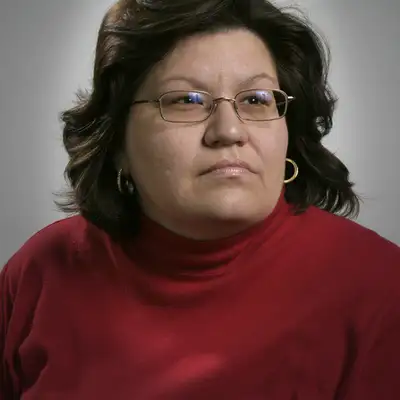
Host
Lisa VanEvery
Lisa has worked for Aboriginal Legal Services for sixteen years. She began hosting the Road To Your Name Podcast in December 2020.