Road To Your Name - Season 8, Episode 5: A conversation with Don Lynch on genealogy and kinship
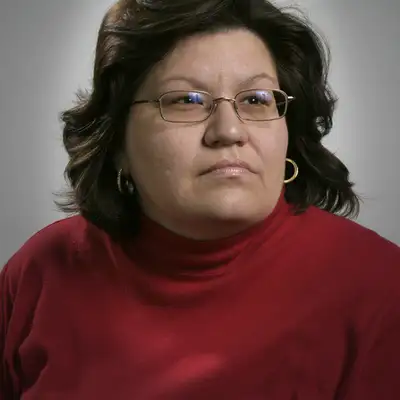
Download MP3Guest: Don Lynch, author and member of Six Nations Geneology Society and Six Nations Library Board
===
Lisa: [00:00:00] Greetings everyone. Welcome to our Yoha:te ne kahsen:na, The Road to Your Name podcast, focusing on Haudenosaunee cultural topics recorded on Haudenosaunee territory.
These podcasts are produced by Aboriginal Legal Services with the technical assistance of True Seed Media. My name is Lisa VanEvery from the Mohawk Nation and the Wolf Clan. I'm the coordinator of the Yoha:te ne kahsen:na, The Road to Healing program, and the host of the podcast.
This is the Yoha:te ne kahsen:na: The Road to Your Name podcast series[00:01:00]
This episode of the Yoha:te ne kahsen:na Road to Your Name podcast, we are welcoming guest Don Lynch. Now Don is a member of the Ohsweken Genealogical Society, and he's also a member of the Six Nations Library Board. So we'll be talking a little bit about, um, uh, lineage and ancestry and, and, um, all that kind of stuff on today's episode.
So I hope you find it enjoyable. So welcome, Don, to the podcast.
Don: Well, thanks very much. Sure. And I, I hope I can provide some interesting information.
Lisa: Oh, I'm sure it will be. I'm really interested in genea- genealogical information. I've, I've done, um, a little [00:02:00] bit in my family and gathered information o- from different relatives.
But, you know, when we're talking about generations of kinship, there's just so much. You know? There's just d- we're like, we, we come from a, a, such a long line of ancestors really, that we never knew. We're all related, uh, more or less if you go back far enough. We're e- either through blood or through marriage, we're all related one way or another.
And I like to say to, to folks, "Speak well of everyone because you don't know who you're talking to." You might be sitting next to a relative. Well, that's a good, um, that's a good way of thinking. Um, so, so let me, let's get started now. Mm-hmm. Um, the Ohswegen, uh, Genealogical Society, how long has that been in existence?
I'm not really sure. I know it's, it's probably at least 15 years, 'cause I've been involved at least [00:03:00] 10. Mm-hmm. Um- Renee Thomas was the head of it, and she's still involved to a certain extent, and then Penny Warner- Mm-hmm ... is now more or less in charge. But s- Well, they meet once a month, right? Yes. Yeah, they do meetings and- Second Saturday of the month, and right now, uh, they're located at Woodland.
Yeah. Okay, so, um, wh- what would... Like, who comes to the meetings, and what are their goals, um, to find out anything at the meeting? What happens at the meetings? Well, there's a mixture. There's some regulars that come and have done extensive research. Uh, they're looking to fill in some gaps with certain, uh, relatives that they, they know something about.
Um, there are other people that are, are brand new, and they're just interested in getting in touch with their roots and finding out something. Um, so there's a mixture. I, I go there mainly because I like to help other [00:04:00] people. Um, I have an extension, e- extensive, uh, uh, collection of family photographs and some, uh, history from St.
John's Church of baptisms and so on, so I can supply some information to folks. Um, I know I, I'll leave it to other people to do the, uh, the, the hard work of, uh, tracing ancestors. For me- It's more than names and dates. I like the stories that are in between. Mm-hmm. Uh, you s- you look at a, a gravestone, and it's got a one date for birth, one date for death, a dash in between, and I'm interested in the dash more than anything else.
I like the stories of these people because they're real people. Oh, you and I have that in common. I really like people's stories as well. Um, so when you're, when you go to the genealogical society, you can have a little bit of information with you or none at all, or, um, you know, trying to find out really who your, [00:05:00] where your roots are.
Yeah, and the way it u- usually starts out is, uh, we go around. There's usually, oh, anywhere from 20 to 35 people, and, uh, we go around the room, introduce ourselves, and maybe some of, name some of our ancestors and-or, uh, what we're looking for, for information. Mm-hmm. And just by listening to folks, you, you hear a familiar name, and you think, "Oh, I know something about that person."
And then after it's gone around and everyone has introduced themselves, then, uh, we have a potluck lunch, and then it's informal, and you can go around and, and help other people. And, and plus they, uh, a lot of people bring their records, and Penny Warner, who's in charge now, has extensive permanent records which she brings to most meetings that people can look at.
And you can get those records if you, um, know you belong to a certain line- Yes ... family. Yeah. Oh, yeah. That would, that'd be really interesting. So, um, you say that you're interested in, in the dash between the da- the years, [00:06:00] um, and y- you've probably researched your own family. Can you, can you tell us a little bout, about your ancestry?
Well, my, uh... Start with my grandparents- Mm-hmm ... Sam and Minnie Anderson. Sam Anderson married Minnie Miller. Mm-hmm. Her father was Hiram Miller. Mm-hmm. And, uh, his wife was Elizabeth Isaac Miller. Uh, so I know that, uh, more about the Anderson family than I do the, the Miller family, but how, uh, how we became Andersons is interesting because- Yeah
uh, my grandfather's father was John Reginald Anderson, but he wasn't born Anderson. He came from the Tuscarora Reserve in New York State- Mm-hmm ... and he was adopted by Cornelius Anderson, and it's a bit of a mystery as to why Cornelius Anderson adopted not just him but other people from Tuscarora. Mm. So h- if you look at a, a chart, [00:07:00] uh, all of a sudden, John R.
Anderson appears out of nowhere. Oh, yeah. And we don't really know how he got to that position. But anyway, um, that's how Andersons came into my family. Mm-hmm. My mother was the oldest of 10, and, uh, she was a very bright student, and, um- She had to take an entrance exam to go on to high school, which was unusual at the time.
Most people finished at grade eight. That was, uh... Well, a grade eight education was probably greater than a grade eight education today. But she went to high school. She went to, um, um, McMaster University after graduating from Central Collegiate in Hamilton. And, um, I'm quite proud of the fact that there's a scholarship named in her honor.
She was the first indigenous woman to graduate from McMaster in 1935. Wow, that's really something. That's remarkable. Um, so with your, with the [00:08:00] stories you've collected over the years of your family, um, do you, what do you do with them? Do you, are you putting them in a book? Are you sharing them with family members?
Um, I th- I should put them in a book. I, I did write a memoir and w- and the epilogue, uh, contains some more information about my mother and, and my, my Uncle Arnold. The, he was the second oldest. He, he became quite famous scientist who worked on the Manhattan Project, and, uh, he founded the American Indian Science and Engineering Society, and there's a scholarship named after him as well.
Wow. Real entrepreneurs. Yeah. Real, real, um, forward thinkers in your family. But as far as writing down and documenting these family stories, I'm g- I'm gonna do more of that. And in fact, um, I think I'm going to, um, ask other family members for their stories because I'm convinced that they won't write them [00:09:00] down, and if I don't write them down, uh, they won't be recorded anywhere, so.
Yeah, for sure. Um, so yeah, I d- I think many people don't think about that. They don't think about writing their ancestors' stories down. And really, identity for, um, everyone, um, as well as indigenous people, identity is so important to who we are. And even though we've, we don't know our ancestors personally, they are so much a part of us.
Yes. Yeah, and you'll, you'll discover, like, an ancestor that maybe, um, you have so much in common with that you didn't really know in person. Oh, absolutely, yes. Yeah. With our ancestry, with, um, uh, studying our families, our family lineage, we live in a time now where, um, we have ancestry.ca, that, that, um, [00:10:00] that huge website that people can go on and try to find their families, and we also have, um, the DNA, the, the D- the DNA, um, website, 23andMe.
So what about those kinds of things now, um, to help us find our ancestors? What do you think about those? Well, one thing, um, I can say, uh, I'm chair of the Six Nations Public Library board, and the library has a library edition of ancestry.ca, which you have to access by coming to the library, but it's free.
And, uh, that has a lot of research, uh, material. Um, as far as the DNA websites, I don't know. I, I've heard good and bad. I have a, a relative that, uh, took the DNA test on one of them. I think it was, um, well, I don't wanna say for cer- for sure because I'm not really sure which one he did. But he did a DNA test, and he submitted his sample, and, uh, [00:11:00] they posted it, and he got in contact, or a relative, a daughter of his deceased brother got in touch with him.
He had no idea that she existed. Mm, so it can- So it did work. Yeah, it can, um, produce some positive results for people, yeah, that they didn't know about. But I, I, um, am concerned sometimes about putting out all of our information out there. I think about, um, the anthropologists in the '70s who came to study us, right?
Yeah. And, and I mean, uh, some of this information, you know, what, like, what is, what is being done with it once it's out there? Mm-hmm. We have to think about that. Well, because, uh, of, um, it, they rely on people submitting samples of their DNA, and Indigenous people tend not to, so their database of people of Indigenous background is limited, [00:12:00] so the results are limited as well.
Yeah. Um, and I know, uh, CBC Marketplace did a, a test with the Aggro twin sisters. They submitted their DNA samples, and you would think being identical twins they would get the same results. Well, they didn't. Mm. You can find that online. I think it's, they have, so YouTube, if you do a Marketplace, uh, DNA test, you can find that.
Oh, yeah. So, uh, mixed results. I think sometimes it works, sometimes it doesn't. Mm-hmm. Yeah, I, I personally have not submitted my DNA and don't intend to. Yeah, me either, I guess. Um, so let's talk about, um, the, you mentioned the Six Nations Library Board and that people could access the ancestry through, through them.
Um, so you have to go right to the library to do it- Yes ... and do the work in the library. Well, it's on- uh, online. It's the, um, uh, the, uh, library edition [00:13:00] of ancestry.ca. You can go on... You, you have to use one of the library's computers, though, in order to access that. Yeah, you have to be in the library. But there's also the, uh, Mohawk Kinship Project.
Let's talk about that. Can you ex- can you tell us what that's about? Well, is it Dakota Brant? Mm-hmm. Uh, did that, uh, in ch- uh, in cooperation with the library, uh, a couple of years ago. And w- we've prepared, uh- uh, visual charts, quite large, two by three, which, uh, you, uh, are not on p- permanent display. You have to come in and make an appointment.
But you can look at them, and she's done extensive work following the mother's line. Mm-hmm. So it's not really, um, genealogy per se, but it is the kinship following the mother's line. Oh, like, like for anyone, how you would do that for yourself or for anyone could go in there and, and, and, and find the information of how you follow your mother's line?
Yes. Uh, for the [00:14:00] Mohawks anyway. Um- Oh, I see. Yes. But you, uh, since we don't have the space or, uh, there's not a permanent display, you have to kind of call ahead and say, "I'd like to look at the Mohawk Kinship Project." Oh, okay. That, well, that's a good resource to know about at the Six Nations Library. Um, so what else about, um, genealogy that can you tell us?
What other, um, interesting stories have you come across? Well, this one, um, I don't know if it came from the genealogy so much as just my listening to family stories, but there's one. Um, my grandfather's youngest sister was, uh, Edith, the, the famous nurse. You can look her up. Her real n- her full name is Charlotte Edith Anderson Montour, and she became the first Indigenous woman to become a nurse.
She served in the First World War. She married Claybron Monture, [00:15:00] M-O-N-T-U-R-E. Mm-hmm. And his father was Joe Monture, M-O-N-T-U-R-E. But there was another Joe Tour, T-O-U-R. Mm-hmm. And they were mortal enemies. Mm-hmm. I've heard this story from, uh, f- from that family, but it's always stuck with me. And this is one of them that I'm gonna write down because a lot of people are interested.
They hated each other on sight. They got into fights all the time. Nobody knows why. Speculation is maybe it was over a woman, but they don't know. Mm-hmm. But Mohawk Joe, as he was known, and Delaware Joe, as he was known, were lifelong enemies. Mm-hmm. And one time they got into a fight, quite serious fight.
Mohawk Joe thought he killed Delaware Joe. Mm-hmm. He left the country. He went and worked on the Panama Canal of all things. And then either when he found out that he hadn't killed Delaware Joe, or he thought the heat had died down, he came back to the country, but they never did become friends. Hmm. This was in the early [00:16:00] 1900s.
Hmm. And they had the same name. Well- With different spellings- Different spelling, yeah ... but the same, the same name. Oh, that's interesting. Um, yeah, I guess more research has to be done- ... on that one to find out the, the full story. Um, well, you've written so many stories and know so much about your own family.
Can you tell us, um, another story from your family? Oh, can tell you lots of stories, but, uh ... Well, two, two come to mind. One, uh, is very short, and that is, uh, what's in a name. My grandmother was supposed to have been called Charlotte when she was born. Char- she would've been Charlotte Miller. But her Uncle George went to town to register her birth, and when he got there, he forgot what they told him.
Mm-hmm. He couldn't remember her name, so he made up the name Minnie Essie on the spot, and that's how she became Minnie Essie Miller, and then later [00:17:00] Minnie Anderson. Oh, wow. But my grandfather, um, was, uh, like most people, was a farmer, um, growing up, a family farm. Most people had a family farm, and they were quite self, self-sufficient.
Um, he went to work for other farmers, some on the reserve, some off the reserve. And, uh, when he was 18 years old, he was working off the reserve- And, uh, they, he was working with a group of other farm laborers who were helping to erect a barn as they all pitched in together. And he described a story of working on this barn, and he had an encounter with what he called a green Englishman.
And by that, I think he meant somebody just off the boat that wasn't accustomed to the ways over here. And they took an instant dislike for one another. Well, it wasn't long before they got into a physical confrontation, and my grandfather, [00:18:00] being a fit young man, knocked him out, knocked out this green Englishman.
Well, he wasn't gonna take that lightly, but he wasn't gonna confront him on the spot either. So later on, as the, they're working on this barn, and my grandfather bent down to pick up some pegs because they used pegs to assemble the barn beams, something dropped from above on his back, just missing his head, but it hit on the back of his neck and his upper back.
It did some nerve damage. He could no longer do hard physical work. Of course, he suspected it was this green Englishman that had done it, but there was no proof. But it did change the course of his life because being, uh, unable to do farm work, heavy farm work, he decided to go back to school, uh, which I said before, uh, grade eight was usual, um, the end of the education for most folks.
And he decided to go back to school so he could learn something to have a, a [00:19:00] better trade in life. So at the age of 18, he went back to school. He went to Caledonia High School along with six others from the reserve. That was the entire reserve contingent of high school students. Um- Him going back to school was also inspiration for his sister, Edith, who later became the nurse.
She went to high school and then later, uh, nursing school. But, um, while he was at Caledonia High School, I think it was the Indian superintendent or somebody on the reserve was looking for a teacher. And back then, as long as you knew more than the students, that was good enough. He was in his, I think, his second year in high school, and he was approached with the opportunity to become a teacher.
He talked it over with his father, and they said, uh, "It looks like a good opportunity," so he became a teacher on the reserve. He taught for m- well, more than 20 years. He actually, uh, was only [00:20:00] replaced, uh, when the government switched hands in 1924, and he was out because he was on the wrong, he was on the wrong political side at that time.
Mm-hmm. Mm-hmm. But, uh, because of that incident with that Green Englishman, he became a teacher, and a very good teacher, and he also inspired education amongst his children. And, um- Mm-hmm ... I think my Uncle Arnold and my mom are good examples of that. Mm. Wow. Yeah, that's an interesting story. Now, as you're telling the story, I'm thinking, I'm thinking, like, how can we, um, how can we inspire the younger generation to, um, to care about these stories To, to wanna know these stories about their ancestors?
I think when they're exposed to them- Yeah ... they become interested. But getting them exposed is something, um, really, it's up to [00:21:00] individuals. Um, you hear these stories, but you don't re- either repeat them, or you don't write them down. And unfortunately, when people pass on, the stories go with them- Mm-hmm
unless somebody documents them. Mm-hmm. So I think that's really important. Um- So to you, documenting your family history is, is oral, oral history is really important, like stor- family stories. Yes. And also, w- um, fortunately, we have a lot of photographs in the family. And- I always asked, you know, "Who are these people?"
You know, and I got names on a lot of the pictures, which, uh, I think most folks should, should do that. Uh- Yeah ... I know in genealogy sometimes people will bring in a picture and say, "Can you help us identify this?" And on the back it just says something like, "Me and Dad." Yeah. Well, uh, that doesn't help much.
We don't know where it was taken or when it was taken. So for the sake of, uh, people in 100 years, if you have photographs right now, it would be a good idea to put some information on [00:22:00] them so that it would help them out in the future. Mm-hmm. And now we l- are living in a, in a, um, time of digital photos.
Not a lot of people have, uh, you know, hard copy- Mm-hmm ... photos anymore. So we, should we get back to hard copy photos? I think it would be a good idea because, um, although, uh, digital photography has its advantages, in fact even sharing old photographs, never lend, though, an old photograph because ch- chances are you won't get it back.
Mm-hmm. But if you can digitize it and then circulate it, then, uh, the chances of it surviving into the future are greater. But definitely, um, print some off and put information on them. Mm, that's a good, that's a good tip. So with original photos, I know, like, they're, they're from a, a, a time long ago when everybody did take photos, and photography was relatively new, too.
Like, we had only black and white photos way back then, right? So I've, I've [00:23:00] seen some of these photos, like some, some people will post them online and say, "Can you help me, um, you know, um, repair this photo?" And then people will post the photo all repaired in, like, a short amount of time. So I don't know how they're doing that.
But, um, is it, is it worth it to keep the photo, the original photo, try to get them pr- re- um, try to get them repaired, and then circulate those ones? Oh, I, I definitely think so. In fact, I've done that with a, a number of, uh, photographs that I have. Um, I have some computer programs. Uh, Topaz is one. HitPaw is another one.
You can actually colorize old black and white photos. Some work out better than others. But, um, as long as you emphasize the fact that this is an altered photograph, it's not the original, but you can get rid of scratches and- Yeah ... change the, uh, the lighting and so on and, and [00:24:00] definitely improve the picture.
But you really should do that for two reasons. One is to circulate it amongst relatives and people that might be interested, but also for your own sake to preserve the picture because you never know what could happen to an original. Yeah. So it's always good to have a, a backup just to, um, in case something happens.
Yeah. And I've always found that interesting, like, they say, "Can you, can you... A black and white photo, can you, um, uh, colorize this?" And then somebody will put a color on a shirt. Like, how did they know the color of the shirt? Yeah. It's, it's just the best guess. That's the, that's it. But it... And sometimes it, it works out well, and other times not so much.
Yeah. I'm sure a lot of photos, old photos, are torn in places and, um, creased in places and things like that. Oh, yeah. You can r- you can repair, uh, um, missing pieces. Um- And maybe sometimes it's, it requires a little artistic skill to do it, but other times, um, a computer [00:25:00] program by itself, uh, can, can restore a photograph pretty well.
And you know what I'm noticing now too, uh, online, is people asking other people to change the background of pictures or take somebody out of a picture. Yeah. And I'm like, is that really, um, uh, you know, is that really, uh- It's cheating. Are you supposed to be doing that really? Because then it's not how the picture was taken- Yeah
really. Well, hey, there's another thing. When I, when I'm looking at old photographs, especially, uh, informal ones, not posed in a studio, but informal pictures, I always wonder, what was the occasion? Why did they gather there to have their picture taken? And what did they do after, right after the photographer says, "That's it"- Mm-hmm
and they all went their separate ways? I, I, I'm just fascinated by the stories before and after- Yeah ... the picture. Yeah. That's really interesting. Um, or like, I always kind of look at an old photograph and I say, "Oh, where did they get [00:26:00] those clothes that they're wearing? Why did they pick those clothes to wear?"
That, that also makes me think that in 100 years, people will be looking back at us right now and the clothes we wear, and they'll say- ... "Aren't they quaint?" "Look at those clothes that they're... Look, look at the funny clothes that they're wearing back in 2025." Yeah. Unless bell-bottoms come back into style.
Bell-bottoms always seem to come back into style. Okay. Um, so genea- genealogy, do you think that everybody should be into it? Oh, absolutely. Absolutely, because it only takes one generation to miss out on identifying- family connections, and some of that information is gone forever. Not everything is documented, especially amongst indigenous people because, uh, it's an oral tradition.
Mm-hmm. And [00:27:00] there aren't that many, uh, written records if you go back far enough. Um, it's, and in s- most cases it's, it's spotty at best. And being an oral tradition, it's important to either document the stories or record them, pass them along. And as I said, it only takes one generation to miss out. Um, I know, uh, my grandmother's, uh, what would she be?
Emily Miller would be a cousin. And, uh, she, we went to visit her once and she brought out this shoebox full of old tintypes. I don't know if you know what tintypes were. No, what are tintypes? Before ph- photographs in the early stages, they had, uh, sheets of metal treated with chemicals exposed to the light and whatnot, and so the picture, the image would show up on a piece of metal.
Oh. And they called them a tintype. Mm-hmm. She had a whole shoebox full of these tintypes with people with stovepipe beaver hats and so on. I mean, [00:28:00] really old stuff. No idea who they were, and yet she had them in a shoebox. They must have been relatives- Mm-hmm ... but, uh, had no idea who they were. And I, and I think that's a shame that these people's identities are lost to history.
I think it's important to remember them. Yeah. They all had interesting lives. Yeah. And in some way or another, um, you know, the family's connected to them, you know, through blood of course. But, um, as I said before, we, you, y- you may get a person five generations later who r- is exactly like a person in their ancestry.
Has the same traits, things like that. Absolutely. That shows up at, uh... Every once in a while somebody will, will say that at the genealogy meetings that we go to, and, uh, they'll say, "Well, yeah, I did that s- uh, or I have a relative that did that same thing." Yes. Yeah. It shows up from generation to generation.
I know. I just had, um, [00:29:00] someone come up to me, um, recently and say, um, "You sound just like your aunt." Which I had never really thought of before. My mother's youngest sister, who's still alive and living in Rochester, sounds so much like my grandmother's youngest sister. Mm-hmm. Uh, and even looks like her. Yeah.
So, and some, and sometimes it'll skip a generation because we, I have a cousin who, uh, in, in her picture she looks just like her great-grandmother. Hmm. So yeah, it, it, it's amazing how, um- Things like that are passed along. Yeah, for sure. My Aunt Luella, um, spent six years at the Mohawk Institute- Okay ... because my grandmother and my Aunt Luella, and my mother's youngest sister Uh, had, they both, uh, s- she and her [00:30:00] mother had tuberculosis.
They went to Shadoke. So, uh, my grandmother thought it would be a good idea for my Aunt Luella not to be home with a household of men. Mm-hmm. She thought she could do better at the Mohawk Institute, so she went there. And, uh, my Aunt Lu stayed there for six years, and she could have come home, but she had friends there.
Um, now I forgot what the ... Oh, I know what it is. My Aunt Lu, uh, w- she used to boast to her friends in a ... She used to boast that she had, uh, an uncle with a wooden leg and a, another uncle with a glass eye. Mm-hmm. She thought that was great. Was that true? Yeah. Oh. Yeah, it was. My, my grand- Well, that's funny ... my grandfather's older brother, John, was a sharpshooter with the Wild West Show.
He knew, uh, Buffalo Bill and Annie Oakley, and he lost his leg in a farming accident. I don't know if you want me to say that. And the other brother, Albert, when he was a kid [00:31:00] or young man, teenager I guess he was, playing a game throwing sticks in the air, and the stick came down and struck him in the eye and he lost his eye.
So that's how- Wow ... one uncle lost his leg and the other lost an eye, and one had a wooden leg and the other had a glass eye. Wow. So Don, you had mentioned that Penny Warner was the, um, the head of genealogy over there at the Oswego Genealogical Society, if anybody wants to get in contact and find out any of their information.
But, um, but she must have some stories too. You know, did she write anything down for- She's written a couple of books. Um, I forget the title of her second book, but her first book was called Footpaths Through History, and it's the story of her relative, James Beaver, who's a noted artist. Mm-hmm. Um, and he also, uh, was quite a, an interesting person.
Besides his artwork, he was in the Wild West Show. Oh, that's really- Or more than one ... interesting. Tell us about that. [00:32:00] Well, have to read her book. Read her book to know about James Beaver. But, um, in my own family, uh, my, my, uh, grandfather's older brother, John Cornelius Anderson, uh, was with the Wild West Show.
He knew Buffalo Bill and he knew Annie Oakley, um, amongst other notable characters. He was a sharpshooter in the Wild West Show. And, um, quite interesting, uh, after his Wild West Show days, uh, he became a farmer like so many other folks. And, um, he had an accident involving a thrashing machine, and he wound up losing a leg.
Mm-hmm. And, uh, he has a, a brother, uh, Albert, a younger brother, who, uh, lost an eye due to carelessness playing a game throwing a stick in the air, and it came down and struck him in the eye and he lost his eye. So there were two brothers missing pieces. And my Aunt Luella Was just fascinated by that, and she would love to [00:33:00] tell fellow students, "Oh, I have two uncles.
One has a wooden leg and one has a glass eye." She thought that was great. Oh, my goodness. Well, you know, you never know whose story in your family would be fascinating to others. Everybody has interesting stories to tell. Yeah, may- Everybody ... maybe you've heard it over and over again and, and you're used to it, and you don't think of it as fascinating, but it could be fascinating to, you know, the younger generation or, you know, even writing it down and preserving it.
Absolutely, and, uh, I'm convinced that everybody, everybody has an interesting story to tell. You might think that it's ordinary, but ordinary life is interesting. Mm-hmm. Uh, I'd like to know what my, my, uh, mother did, for example, when she was growing up. What games did she play? Who were her friends? Uh, who were her enemies- Mm-hmm
if any? Right. I [00:34:00] can't imagine she had any enemies, but- Mm-hmm ... things like that. Um, like, I don't know how my mother and father got together, which I wish I'd knew. But there's the other thing, um, ask people questions now while they're still around because there's a whole generation or more that are gone that we had the opportunity to ask questions of and we didn't.
I know I, I'm in that situation. I'm glad I asked the questions that I did and got names on photographs and everything, but write the stories down and ask questions. Uh, and, um, for your own sake, you'll, you'll- You'll have done your part for, uh, future generations. Well, those are really wise words. And, and, um, to just kind of be inquisitive, you know?
Find out, find out things about your family and, and, um, everyone has a story to tell. Yeah. Yeah. Okay. [00:35:00] Anything else you'd like to add, Don? I mean, we've talked about a lot. Well, just if you have a drawer full of photo- old photographs, put some information on them. Put the name on them, put a date on it, maybe the location.
People in 100 years will thank you. And also, write down the family stories or record them. You don't have... If you don't think you can write, get a tape recorder or a- ask somebody who can record, and, uh, just tell their story. Mm-hmm. Now, we all have our notes, our recorder notes on our iPhones, on our phones now.
All we ha- need to do is press a button these days. There's no excuse not to do it then. Yeah. And then, you know, with the digital photographs, we could, we could print out like a contact sheet of just, you know, of what they look like, but still keep them digital, but write the names on the, on the contact sheet.
So Don, tell us how, [00:36:00] um, if anybody's interested in starting out doing their genealogical work in their, on their, um, lineage, or wanting to find out information for themselves, where can they go? Well, I think the best place to go is to, uh, go to Facebook, even though I'm not on Facebook. I'm not on any social media, but most folks are.
Go to Facebook. There's a d- a Sweetken Genealogical Society has a Facebook page, and there you can get information. Uh, I think there's contact information, but y- also there's, uh, announcements of upcoming events. And, uh, just come out to a meeting. There's always newcomers. Uh, there's usually about a third of the people that show up are newcomers, first-timers.
Uh, a lot of repeats after that first time, but come out and, uh, don't be afraid. Just introduce yourself and say what you're looking for, and people are just so willing to help others find their ancestors and, and get in touch with, uh- Mm-hmm ... people. So if you think you're, [00:37:00] you're, um, related to anybody that comes from Six Nations, I mean, we don't have everybody's genealogical information, but from, if you think you're, um, from Six Nations, you can do that.
Uh, there's people there to help you. So yeah, come on out and, and do that because you know what? Six Nations is the largest populated First Nation in Canada really. We have over 30,000 members, and only half of them live on, um, the reserve. So the other half is scattered around the globe somewhere. Do they know who they are?
Um, so yeah, if you, if they, um, wanna make a connection, that's an opportunity for them. The value of getting in touch. I posted a picture on the library, m- my own family picture. My Uncle Arnold, who I mentioned, the, the scientist. Yeah. And it was a picture of him, uh, and a, and a little girl, and [00:38:00] the information on the back was Arnold's daughter.
Now, I didn't know he had a daughter, but turns out I found out that he had a daughter before he was married. Mm-hmm. And, uh, I, I put the picture on the website, so I can describe this in a way that will relate to genealogy. I put the picture out there, and because it said Anderson, his, his grandson living in California- Went on the internet, saw the picture of this girl who would've been his aunt Mm-hmm He hired a detective and tracked her down.
She lives in Hogansburg, which is on the American side of the reserve there. It straddles the border. And, uh, they made connection. He's visited her. She came down to Six Nations, and I visited with her, and the family's come together all through posting a picture and somebody getting in touch with their relatives- Mm-hmm
that they didn't [00:39:00] know existed. Mm. Yeah, that can happen. So I wanna say thanks, nia:wen to Don Lynch, um, for, um, joining us today on this episode of Yohantek Nikasonta, The Road to Your Name Podcast. And you do have a book. Well, you wanna plug your book, Don? Oh, sure. Why not? Why not? It's The Metal Man, Drunken Pigeons, and Me, and there really were drunken pigeons.
Don: I, I grew up in Rochester, New York, and our neighbor did have a problem with pigeons. And, uh, I don't wanna spoil it, but, um, I think it's chapter 13, uh, I describe how the pigeons became drunk. And where can, um, we find your book? Oh, you can, you can find it and read a sample actually on Amazon. Um- Mm. Okay.
Don: Yeah ... I published it in, uh, in 2022, and, uh, I've gotten some really good reviews, so, um, yeah, thanks very much. And, uh, can I just say one final word, is that is-
Lisa: Yeah, sure ...
Don: Document your family stories. Write 'em down. [00:40:00] Tell somebody. Put information on the pictures, and people will thank you in 100 years.
Lisa: You might not be there to get the thanks, but they'll thank you anyway, right?
Don: Absolutely.
Lisa: Okay. Nia:wen to Don Lynch, and check out his book. It's available on Amazon. Nya:wen. Onakiwa:hi.
Lisa: Nya:weh, thank you for listening to this episode of the Yoha:ten ne kahsen:na: The Road to Your Name podcast, which has been produced by Aboriginal Legal Services and hosted by me, Lucia VanEvery. There are 10 podcast episodes in each season. Let's meet again on the next episode If you would like to learn more about our organization, Aboriginal Legal Services, and the programs and services we provide, please visit us at our website, [00:41:00] www.aboriginallegal.ca.
And if you feel inclined and would like to make a donation, you can click on the word Donate located at the top of the homepage of our website. You can also visit us on Facebook at Road to Your Name. This has been the Yoha:te ne kahsen:na The Road to Your Name podcast
Creators and Guests